Three hundred metres down in the Hyuga-nada, where no light should reach, this little fish carries two lamps of its own: huge blue-green eyes that glitter in the net. Mehikari — "eye-shining" — was for generations a bycatch fit only for fishermen’s pots and fish feed. Then a Nobeoka restaurant fried it whole, bones and all, and the trash fish became the city’s treasure.
The fish with shining eyes
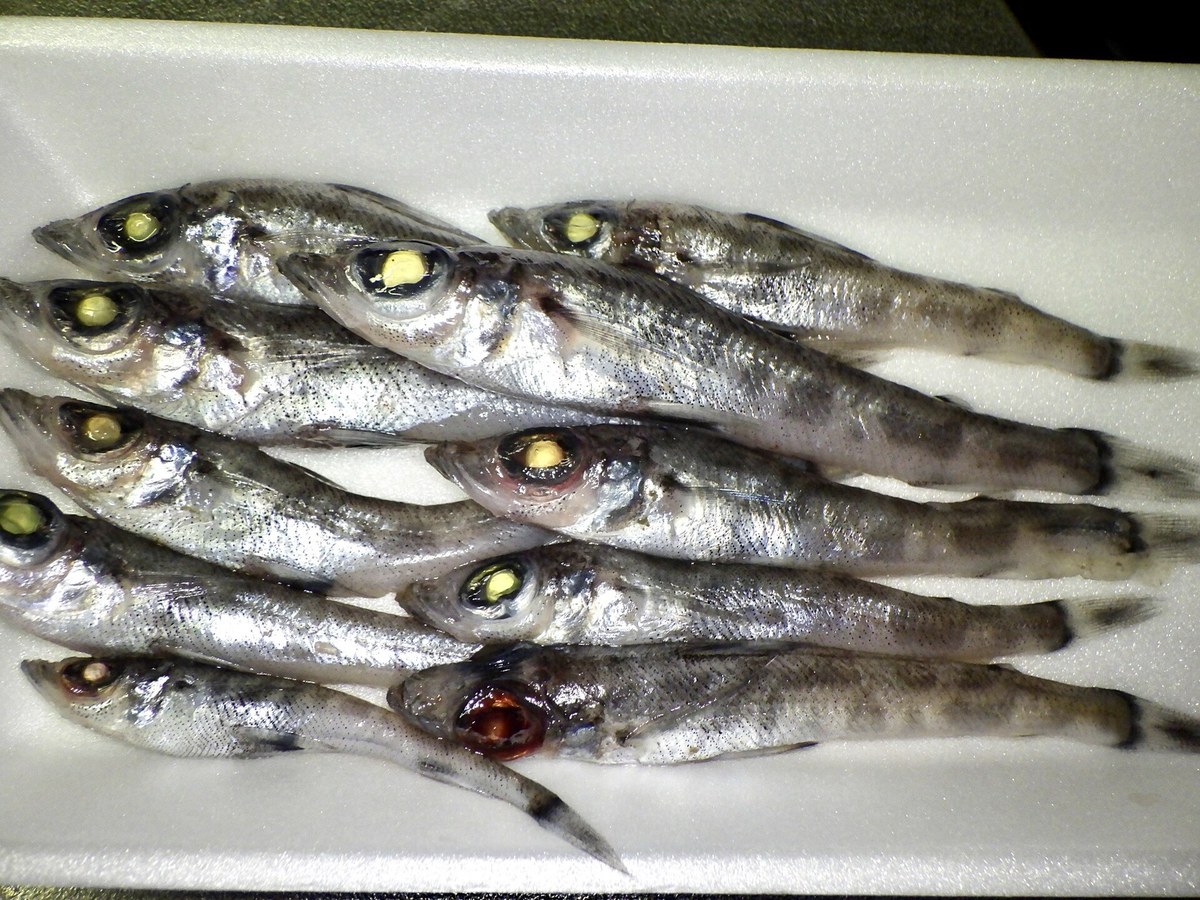
The agriculture ministry’s Miyazaki record introduces the fish by its depth and its eyes. Mehikari is taken about 300 metres down in the Hyuga-nada off Nobeoka, and it is small — five to fifteen centimetres. Its formal name is aome-eso, the blue-eyed lizardfish; its everyday name, mehikari, "eye-shining", comes from the big blue eyes that glitter when the net comes up. The first photograph in this article is a tray of them, eyes lit like green glass.
For most of its history the glitter bought it nothing. Mehikari came up as bycatch in the deep-sea shrimp trawls and was treated as a trash fish — fishermen’s meals, or feed for aquaculture. The turn came in Nobeoka, where a Japanese restaurant, convinced by the fish’s delicate white flesh and soft texture, worked out dishes for it and put it on the menu; the media followed, and the bycatch became a speciality.
Fried whole, bones and all
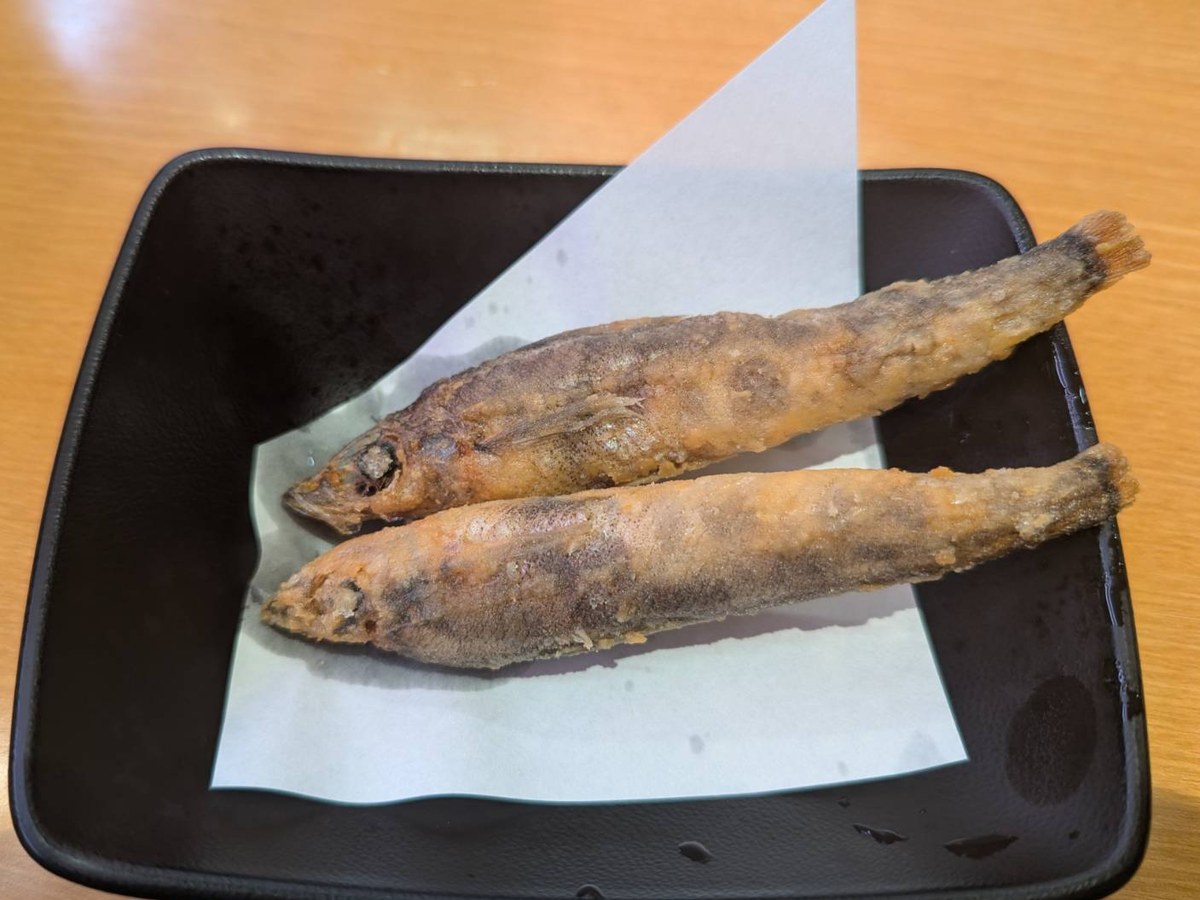
The dish the ministry records is mehikari no karaage, and its method is a small ceremony of respect for a soft-boned fish: take off the head, gut and scale it, season with salt and pepper, dust with flour or potato starch, and fry at 180 degrees. Because the bones are soft, the fried fish is eaten whole, and it has become a prized accompaniment to drinks. The second photograph in this article is exactly that — two whole mehikari, fried on paper, identified on Wikimedia Commons as the Miyazaki dish.
Karaage is only the flagship. The same fish is eaten as nanban-zuke, as tempura, salt-grilled, and — when it is truly fresh — as sashimi. In Nobeoka it has gone all the way into school lunches, where the ministry record says the children love it, and the prefecture is developing mirin-dried and tsukudani versions to build mehikari into a Miyazaki speciality in its own right.
A closed season and a priced kilo
Mehikari’s new value is guarded. The May and June spawning season is closed to fishing; outside it, the fish lands almost all year, with the peak in July and August — a reopening the ministry record says the citizens of Nobeoka genuinely wait for.
The dated retail record is the city’s own: Nobeoka’s hometown-tax store lists karaage-ready mehikari — a kilogram of fish landed and processed in the city, heads and guts removed, lightly seasoned and dusted fish by fish so they fry straight from frozen — at a 12,000 yen donation, in stock. A fish that was once feed is now sold prepared, by the kilo, under its home city’s name.
Why this mehikari belongs to Nobeoka
Honesty is part of this article: the ministry record itself notes that mehikari is not unique to Miyazaki — Iwaki in Fukushima is the other famous ground, and the two cities are sister cities by an Edo-period accident, the Naito house’s transfer from Iwaki to Nobeoka in 1747. The fish, then, is shared. The article documented here is the Miyazaki half of the story: the Hyuga-nada ground off Nobeoka at 300 metres, the restaurant that first cooked it seriously, the karaage method recorded under Miyazaki’s name, the closed season, the school lunches and the city’s own retail record.
A trash fish is a judgement, not a fact. Nobeoka simply withdrew the judgement first — and wrote the recipe down.
Sources — checked 13 November 2026
- MAFF, Our Regional Cuisines — Mehikari no Karaage, Miyazaki
- JAL hometown-tax store — Nobeoka City karaage-ready mehikari 1 kg
Checked 13 November 2026 (stored links re-fetched and judged per product): reserved where the page says so, with an editorial review note kept per product. Press, PR and travel use stays outside the grant.
Editorial review 2026-11-13