Tantanmen is supposed to be about sesame. Katsuura's is about its absence. The fishing city on Chiba's outer Boso coast makes its tantanmen on a soy-sauce soup with plenty of chili oil and no sesame paste at all, loaded with onion and minced pork until the surface runs bright red — a bowl built, on the local record, to warm fishermen and divers coming back from a day's work in a cold sea. It was devised in 1954 at a shokudo called Ezawa, which still serves it under the name Katsuura Tantanmen®, and the whole city now cooks its own versions of the form Ezawa started.
No sesame: the definition is a subtraction
The TABERUKOTO local-food map entry is one sentence of subtraction: the dish uses a soy-sauce-based soup and plenty of chili oil instead of the Chinese sesame paste usually used in spicy tantan noodles, and is full of onion and mince. Where Sichuan-derived tantanmen elsewhere in Japan coats the noodles in sesame, Katsuura's — nicknamed katsu-tan — runs clear, red and sharp, the heat carried by oil rather than paste. The Ezawa record names the same build from the maker's side: a soy-sauce base cooked with homemade Chinese red chili oil, topped with minced meat, onions and scallions.
The heat is the point and the record does not soften it: the GOOD LUCK TRIP taster's first word for the bowl is 'spicy', the regular level already sweat-making, with an 'extra spicy' above it the taster declined. This is not a mild regional variant trading on a name; it is a deliberately hot bowl whose form — soy, rayu, onion, mince, no sesame — every shop in the city now observes while seasoning its own way.
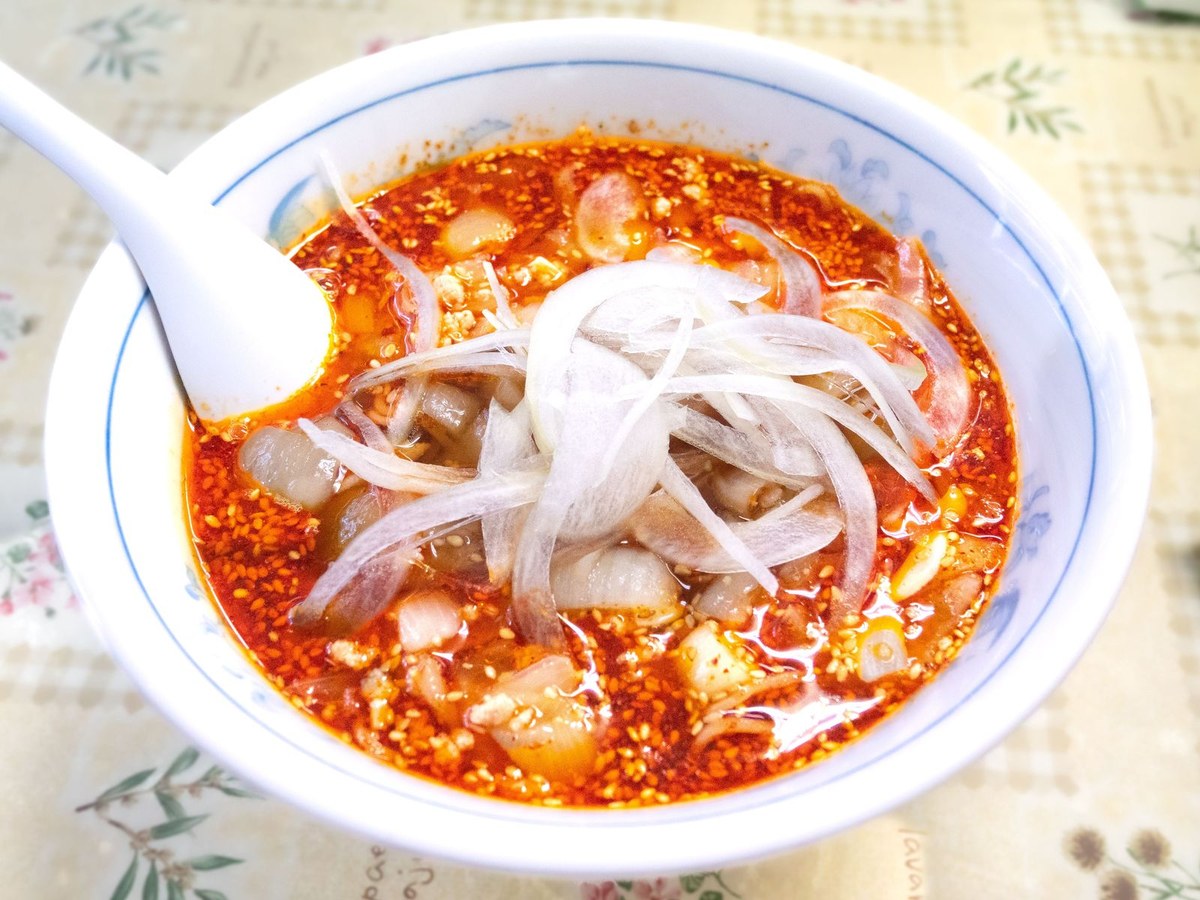
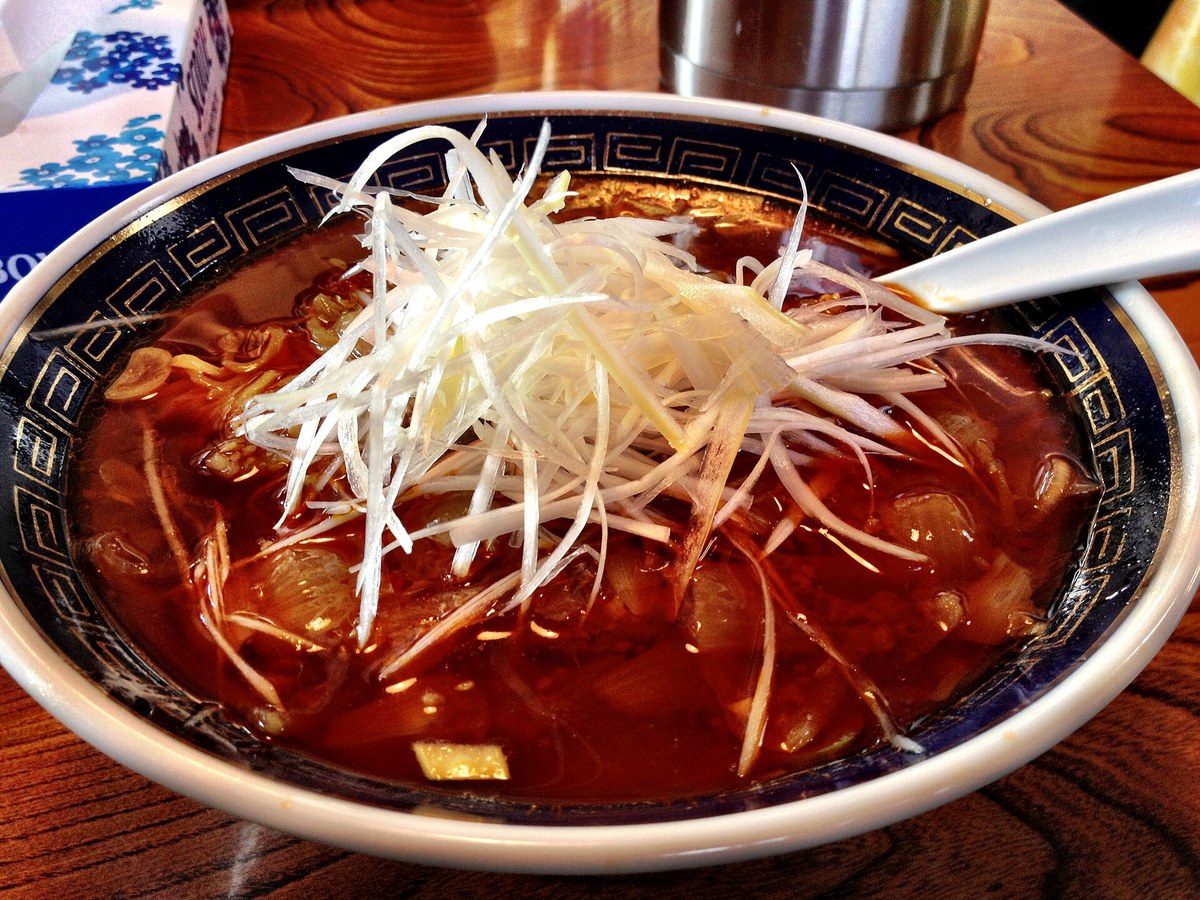
1954: Ezawa builds the bowl
The origin has a shop, a date and a mechanism. Ezawa — its full name is Ganso Katsuura-shiki Tantanmen Ezawa, 'the original Katsuura-style tantanmen' — is the original restaurant that began serving the dish, founded in 1954, when its first owner came up with the idea inspired by Sichuan noodles, on the GOOD LUCK TRIP directory record. Seventy years on, the house still makes its chili oil itself and still closes when it sells out.
Why this bowl in this town, the TABERUKOTO record answers plainly: it was once a staple to warm fishermen coming back from a day's work. Katsuura is one of Japan's great fishing ports and one of its three great morning markets; the MUST EAT MAP guide to that market adds the divers — the form of no sesame, only chili oil and onion, was born to warm the chilled bodies of fishermen and ama. A bowl designed as heating equipment became, in time, the city's signature.
One form, a city's variations
A local dish proves itself by multiplying without dissolving. The TABERUKOTO record notes that Katsuura tantanmen is now available in many restaurants in Katsuura City, and that the form has branched: the normal noodles in soup, a tsukemen variation with noodles and soup separated for dipping, and a fried-noodle version. The heat, the soy base and the missing sesame survive every branch — that is what makes them variations of one dish rather than three dishes sharing a name.
The market guide makes the same point from the visitor's side: at Ezawa, the birthplace, or at Ishii in the morning-market area, the bowl closes — or opens — a Katsuura morning, eaten as morning ramen from the start of the day. The queue at Ezawa agrees with both records: the directory taster waited about fifteen minutes at mealtime, in a shop the locals themselves recommend.
Eating it in Katsuura
Start at the source: Ezawa, 296-8 Shiraikubo, Katsuura City — about twenty minutes by bus from Katsuura Station — open 11:30 to 18:00, closed Mondays, lunch-only on Wednesdays and Sundays, and liable to close early when sold out; cards are not accepted. The GOOD LUCK TRIP directory puts the budget at ¥1,000 to ¥1,500. Order the regular heat first: the record's warning stands, that the standard bowl is already plenty spicy, and winter adds the house's other signature, a stewed-offal dish served only in the cold months.
For the market version, eat it in the morning in the market streets, where Ishii and its neighbours serve the bowl from the start of the day. Either way, what you are tasting is the subtraction: no sesame to round the edges, just soy, oil, onion and heat — the exact bowl a 1954 shokudo owner built for cold hands, unchanged in form for seventy years.
Sources — checked 13 November 2026
- GOOD LUCK TRIP — Ezawa Katsuura Tantanmen Noodle, Katsuura City (directory record, checked 13 November 2026)
- TABERUKOTO, Japan Local Food Map — Chiba: Katsuura Tan Tan Noodles (checked 13 November 2026)
Original prose and official links only; no source text or maker media reproduced. Photos are credited Creative Commons works, not product photographs.
Editorial review 2026-11-13