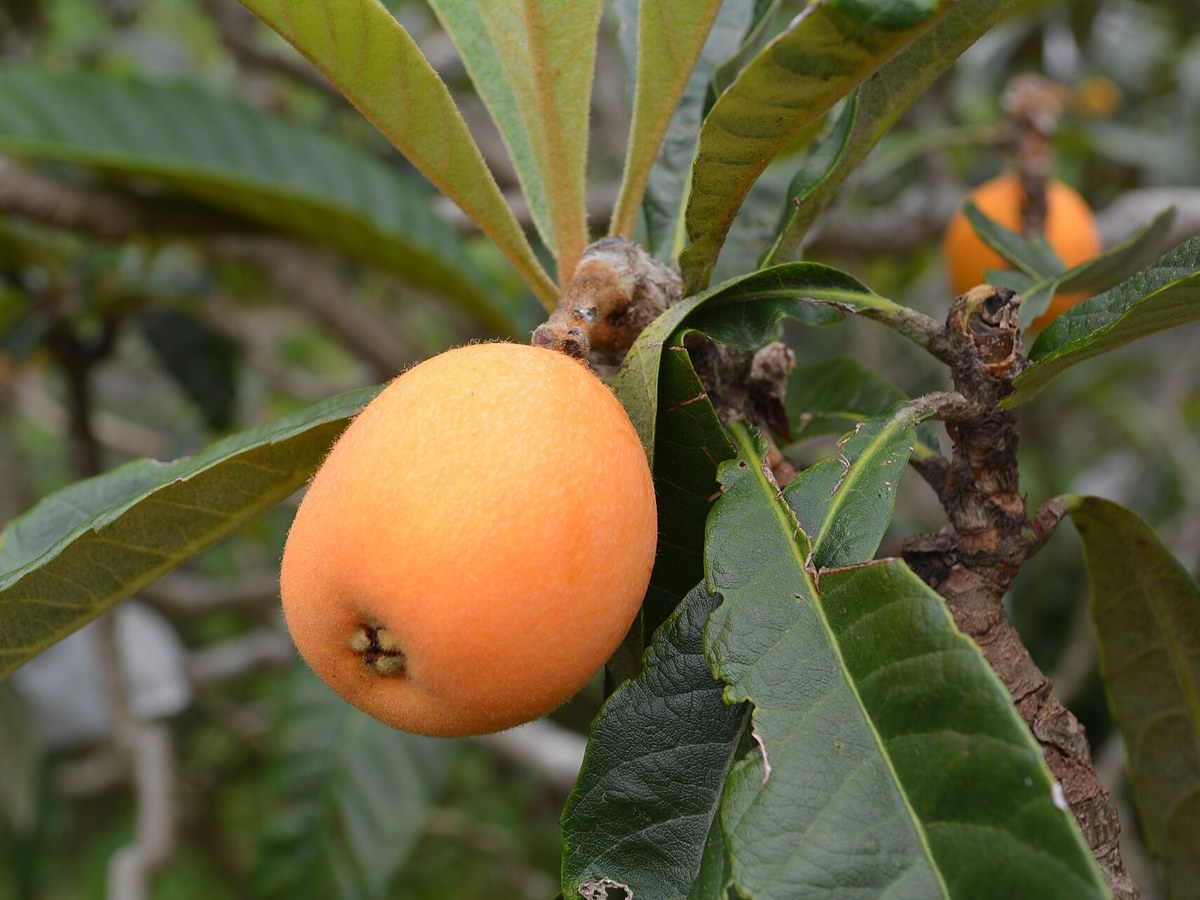
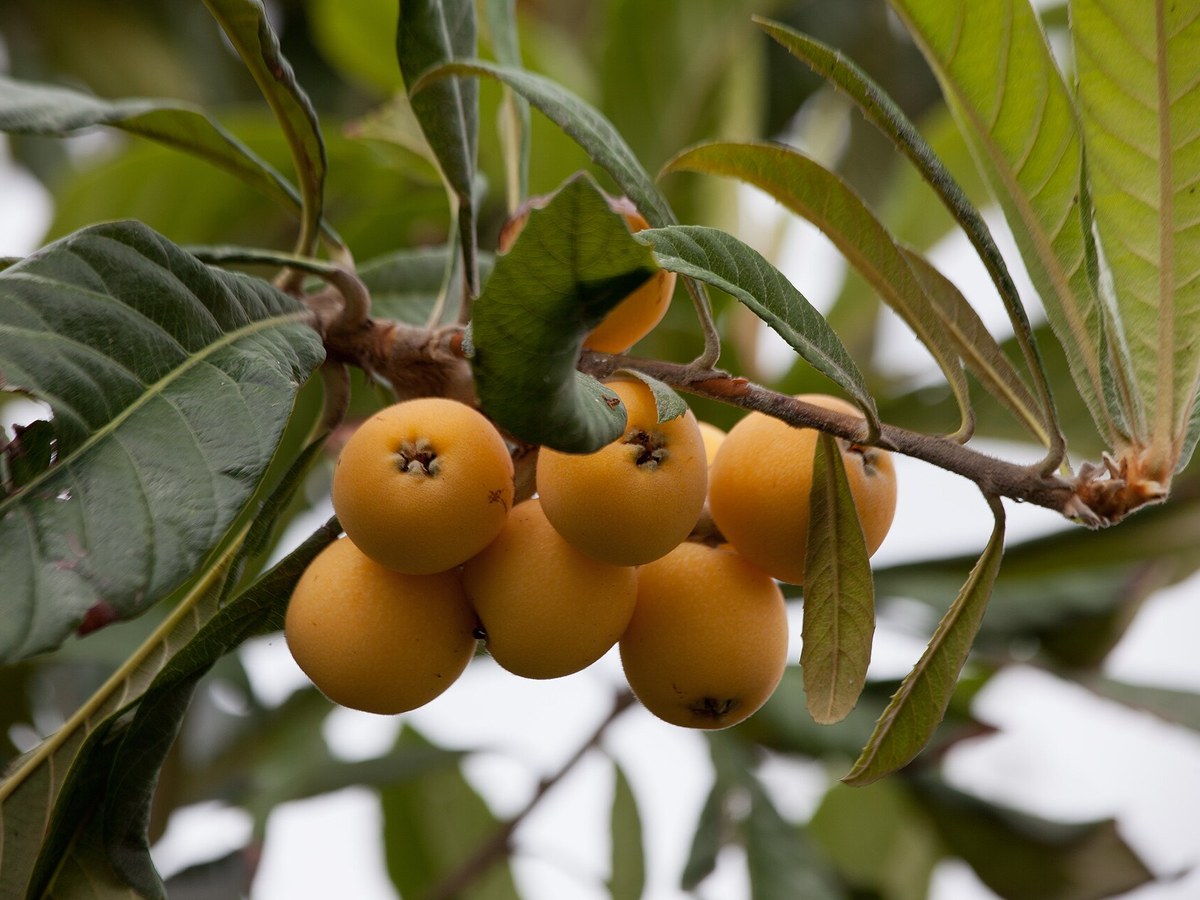
A loquat is a delicate thing — thin-skinned, easily bruised, ripe for a few weeks. In Minami-Boso, at the warm southern tip of Chiba's Boso Peninsula, growers have made a monument of it. Boshu Biwa, the loquats of the old Awa district, are grown large — deliberately, by thinning flowers and fruit hard and bagging every survivor by hand — graded by size like eggs, and chosen each year by a judging committee for presentation to the Imperial Household, a line that has run since 1909. The name itself is protected: a regional collective trademark, held for the Minami-Boso ground.
A name registered to one warm corner
Boshu is the old provincial word for the south of the Boso Peninsula — Bo, from Awa province, with shu, province — and the brand record is exact about what it covers: loquats grown in the Minami-Boso region, mainly in Minamiboso City (the former Tomiura Town), Tateyama City and Kyonan Town, juicy and large-fruited. The name was registered as a regional collective trademark on 2 March 2007, on the application of the Awa agricultural cooperative — a legal fence around three municipalities' fruit.
The concentration inside Chiba is striking: on the 2006 prefectural figures carried in the brand record, Minamiboso City alone held 146 of Chiba's 169 hectares of bearing loquat trees — 86 percent of the prefecture — and Chiba as a whole is Japan's second loquat prefecture, behind only Nagasaki. Boshu Biwa is therefore not a prefecture's sideline; it is one small warm district carrying a national crop.
Offered to the throne since 1909
The food-culture record dates the cultivation itself to 1751, with the fruit already being shipped to Edo's markets under the Boshu name in the mid-Edo period. The modern honour began on 20 June 1909, when a grower in what is now Minamiboso first presented the fruit to the Imperial Household; apart from a wartime interruption, committee-selected Boshu Biwa has been offered every year since — a quality contest built into the calendar, because the fruit that goes to the palace is picked by judges, not by the grower.
The Tateyama furusato listing repeats the point as the fruit's headline: Boshu biwa is offered to the Imperial Household, and because the fruit is so delicate it circulates only in a limited area — a Minami-Boso early-summer taste that most of Japan never sees in a shop.
Bagged one by one against the winter
The work is the price of the size. Loquats flower in winter, and the records are blunt about the enemy: if the temperature falls below −3 degrees Celsius the young stones freeze and rot, so greenhouse growers heat through the cold months. From late February every kept fruit is individually bagged against pests and leaf-rubbing — at the specialist Tomiura farm whose prices anchor this story, thinning of flowers and fruit is severe and the bagging takes the better part of two months.
The result is graded like a jewel crop. At that farm the ladder runs M, L, 2L and 3L; the 2L is described as about the largest loquat a supermarket ever shows, and the 3L — a size that barely circulates — sells out within hours of orders opening, to repeat customers only. Greenhouse fruit ships in May and the open-field fruit in June: the whole Boshu season is about a month, split in two.
Buying Boshu biwa
The checked retail record is Fukuhara Farm in Tomiura, Minamiboso — a Boshu-biwa specialist selling its own fruit direct. Its ladder, tax included and shipping extra, runs: M size ¥2,800 for 15 fruit, L ¥3,400 for 15, 2L ¥4,000 for 12 and the repeat-customer 3L ¥4,600 for 12, with reservations opening each 20 April for May greenhouse and June open-field shipping. At the gift end, Tateyama City's furusato listing offers greenhouse Boshu biwa (L ×15 or 2L ×12, boxed) at a ¥20,000 donation.
What to check on any box: the Boshu name and a Minami-Boso origin — Minamiboso, Tateyama or Kyonan — and the calendar. A 'Boshu biwa' offered in August is a processed product or a mistake; the fresh fruit exists only in May and June, and it bruises if you look at it firmly, so it is eaten within days.
Sources — checked 12 November 2026
- Shun Gate — Boshu Biwa, a juicy early-summer fruit grown in Minami-Boso
- Fukuhara Farm — Boshu biwa specialist farm, Tomiura, Minamiboso (checked 12 November 2026)
- Boshu Biwa — brand record (Japanese Wikipedia, after the Chiba prefectural statistics and the trademark register)
- JAL Furusato — Tateyama City, Chiba: greenhouse Boshu biwa, boxed (checked 12 November 2026)
Original prose and official links only; no source text or maker media reproduced. Photos are credited Creative Commons works, not product photographs.
Editorial review 2026-11-12