Order a tart in Matsuyama and no pastry arrives: the city’s tarte is a castella sponge rolled around yuzu bean paste, and the cut face draws the hiragana letter "no". Ichiroku Honpo, the house named for the year 1883, rolls thousands of them a day — the last turn still done by hand, in two or three seconds a roll.
A tart that is not a tart
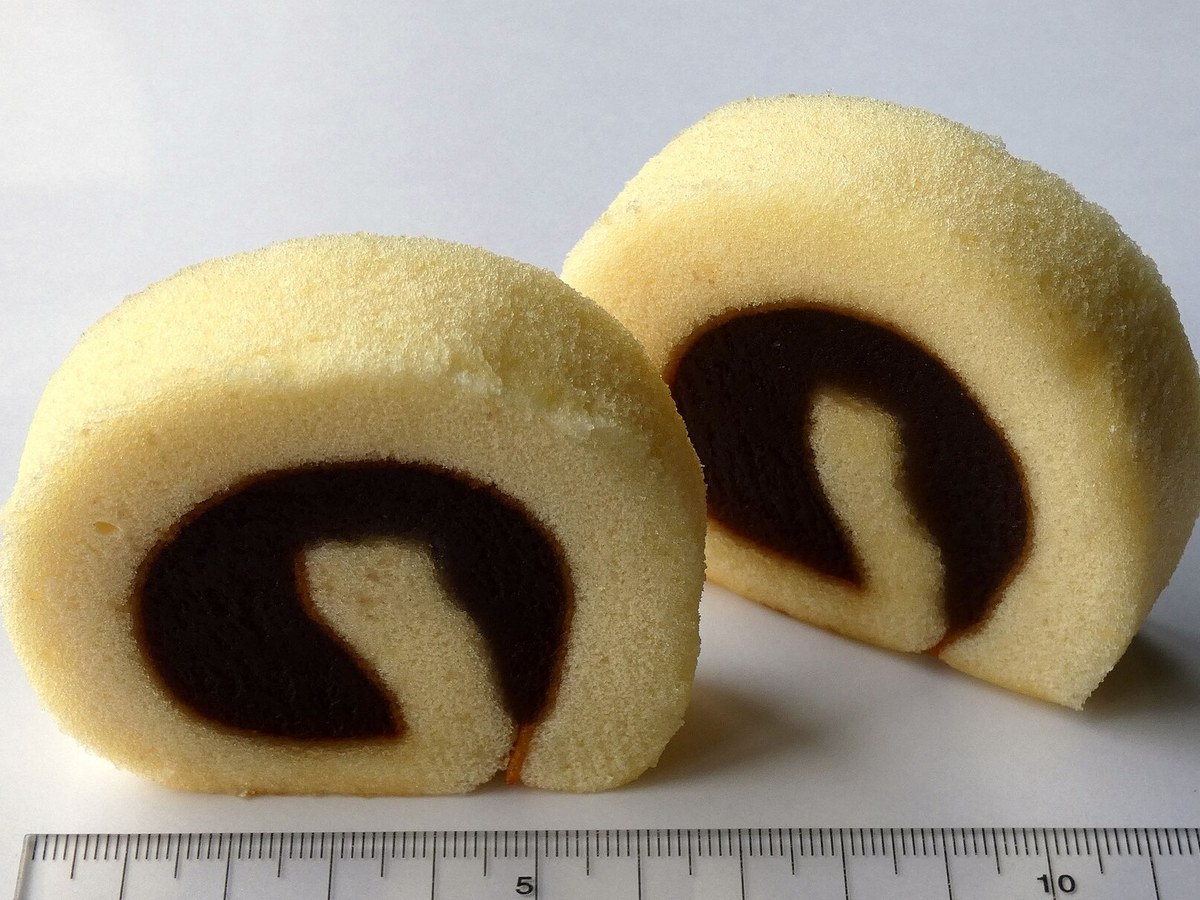
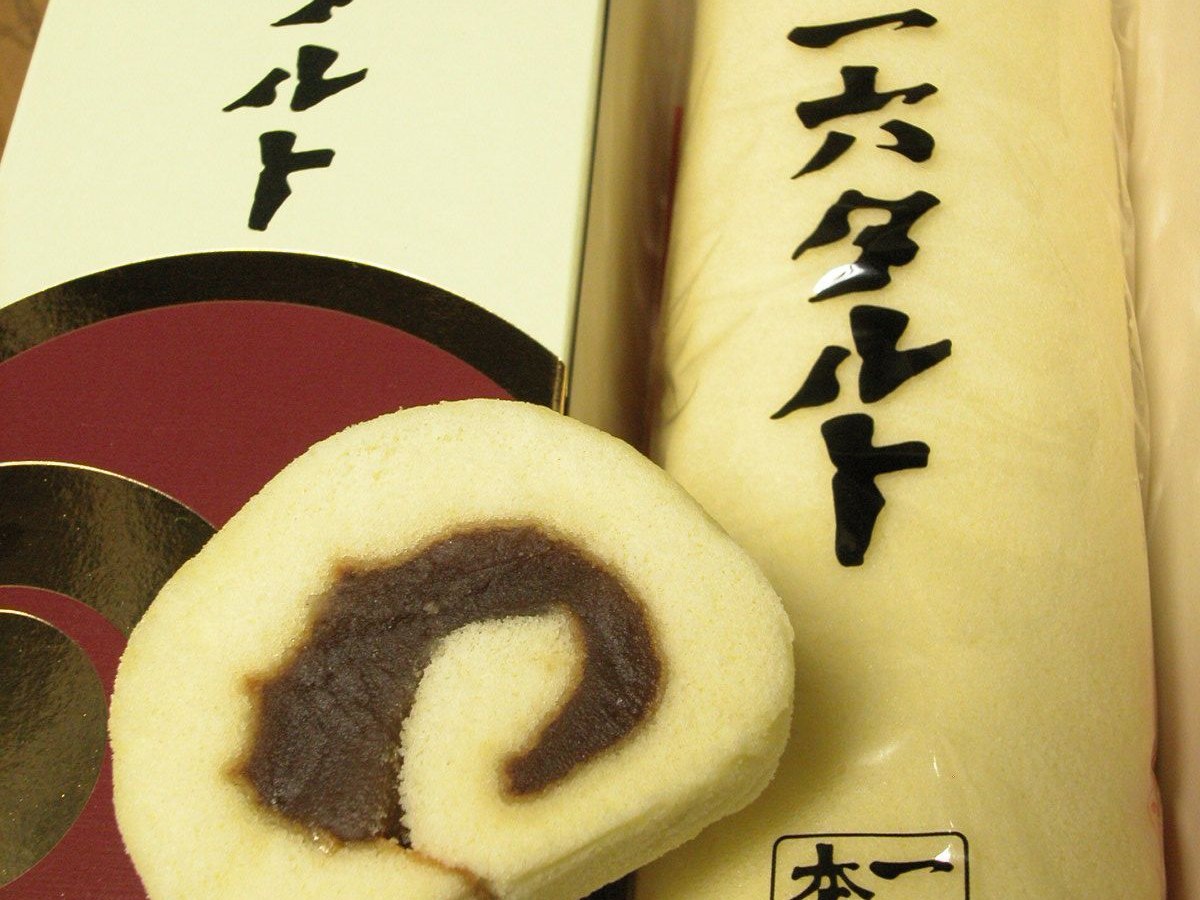
Matsuyama’s tarte breaks the word. There is no pastry case and no fruit: a soft castella sponge is spread with koshi-an — smooth red-bean paste worked with yuzu — and rolled so the spiral in every slice draws the hiragana "no". The name itself is an import, traced either to the Dutch taart or the Portuguese torta, and since 1954 the word has been a registered trademark of the Ehime confectionery association, held for the whole trade rather than one house.
The form is strict enough to have rules — in Matsuyama’s home district the recipes were closely kept — and loose enough to have spread across the prefecture and into department stores nationwide. Our photographs are the leading house’s version: two cut rolls showing the spiral, and the packaged roll with its first slice laid against it.
1647: the lord who brought a cake home
In 1647 Matsudaira Sadayuki, first lord of Matsuyama, was on harbour-guard duty at Nagasaki when a Portuguese ship came in, and he ate the nanban sweet of the port: jam rolled inside castella. Taken with it, he brought the method home to Matsuyama, and because the jam had been a citrus one, Shikoku’s own yuzu was worked into the adaptation. The recipe became a guarded tradition of the Hisamatsu-Matsudaira house, passed to the town’s confectioners only after the Meiji restoration, and the sweet’s real spread came after the Second World War.
The first Matsuyama form, the record notes, was not sponge at all: karukan — the yam-and-rice-flour cake — wrapped the bean paste. The castella roll that defines the tarte today settled over that older body.
Ichiroku Honpo, the house of 1883
Ichiroku Honpo was founded in 1883 — Meiji 16 — and took its name from the year: ichi-roku, one-six. The encyclopedia record names it the industry’s leader among Matsuyama’s tarte houses. Its factory turns out between three thousand and ten thousand rolls a day, and the finishing roll is still done by a craftsman’s hands, at two to three seconds per roll, because the "no" in the cross-section has to come out clean.
The standard roll is yuzu; around it the house has built matcha (a regular line from April 2026), seasonal flavours, and collaborations — a Godiva-supervised bitter-chocolate piece in 2025. In 2022 the sweet even took to the rails, when the Iyo Railway ran a tarte-wrapped tram with Ichiroku Honpo.
Buying it
The yuzu roll is the anchor: ¥1,058 tax included for one roll, pre-sliced into eleven pieces, on Ichiroku Honpo’s official listings. If one roll is too much, the same sponge and paste are sold as hitokire tarte — single wrapped slices at ¥172 for yuzu on the official shop record — and the rolls keep about twenty-three days. The matcha roll stands at ¥1,404 on the maker’s current information.
Buy it in Matsuyama if you can: the house keeps twenty-seven shops across Ehime, and the official online shop and the maker’s Rakuten store ship the rolls nationwide. What you are buying is the cross-section — cut a slice and check that the "no" is drawn properly before you judge the house.
Sources — checked 15 November 2026
- Tarte (regional sweet) — encyclopedia record (the "no" cross-section, the 1647 Sadayuki origin, the 1954 trademark, Ichiroku Honpo as industry leader)
- Ichiroku Honpo official store listings and the Ehime travel record (the ¥1,058 roll, the ¥172 slice, the hand-rolled finish)
Checked 15 November 2026 (stored links re-fetched and judged per product): reserved where the page says so, with an editorial review note kept per product. Press, PR and travel use stays outside the grant.
Editorial review 2026-11-15