Taimeshi means sea bream rice, and in most of Japan it means one thing: fish cooked into rice. Ehime, Japan's sea bream prefecture, keeps two. In the centre, around Hojo in Matsuyama, a whole grilled sea bream is cooked into a pot of rice and its flesh folded through — the celebration dish, scented with kelp. In the south, at Uwajima, the fish never meets heat at all: sashimi is stirred through a sauce of raw egg and soy and poured over hot rice, a meal the record traces to pirates who could not light a fire. Same prefecture, same fish, same name — opposite dishes.
One name, two dishes
The Hojo style is cooked theatre. A whole sea bream, grilled first, goes into the pot on top of the rice with kelp stock; when the lid lifts, the fish is taken out, its flesh picked clean of bone and mixed back through the grains, so every mouthful carries the fish. Nothing else competes — no burdock, no carrot — because the point is the sea bream's own flavour pushed into the rice. It is the festive form: tai sounds like medetai, congratulations, and Hojo serves its taimeshi at celebrations, New Year among them.
The Uwajima style is its mirror image. Slices of sea bream sashimi — the fish extremely fresh, often the day's catch — are mixed with a special sauce of raw egg, soy sauce, mirin and sake, with sesame and condiments, and the whole is poured over a bowl of hot steamed rice. The egg binds the sauce to the fish, the hot rice just warms its surface, and the dish is eaten within minutes of the mixing. Where Hojo is a pot cooked for a gathering, Uwajima is fast food of the highest raw material.
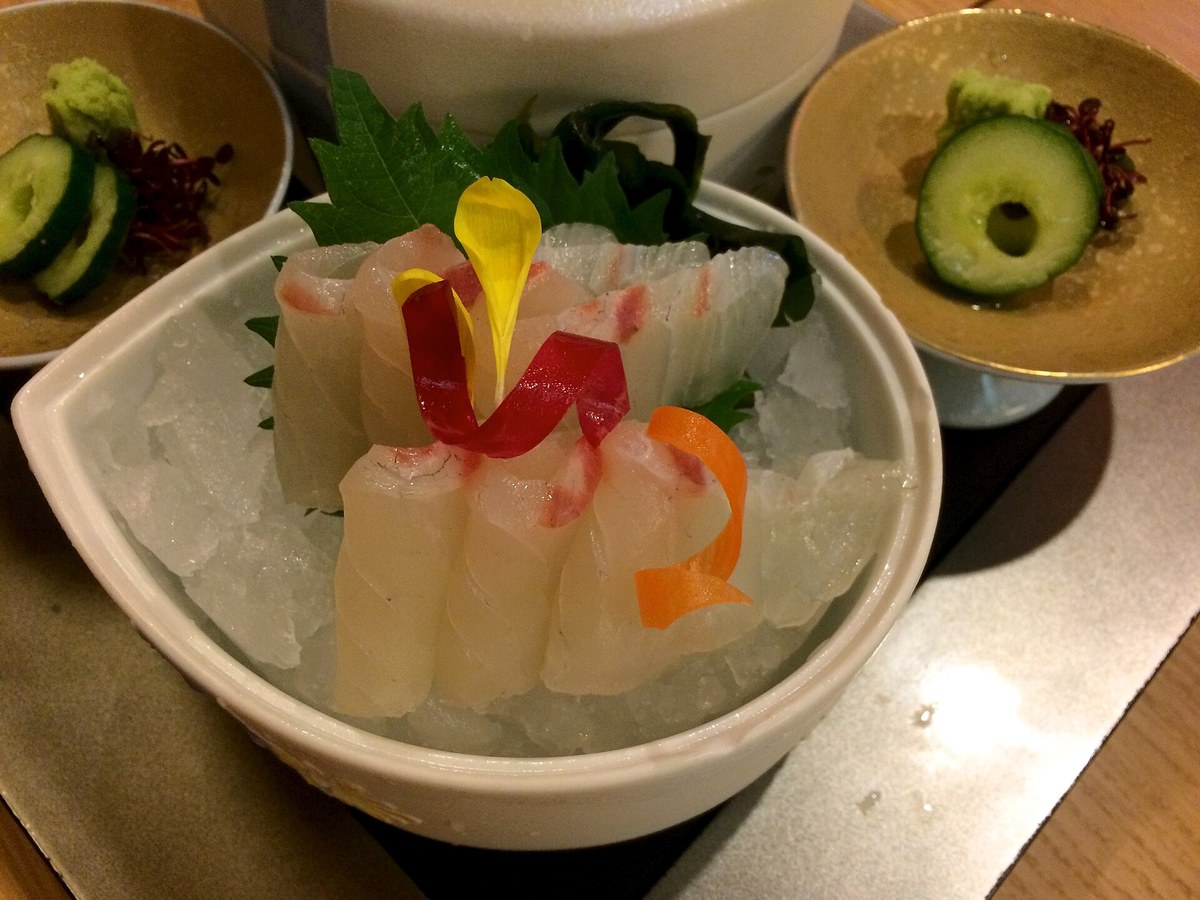
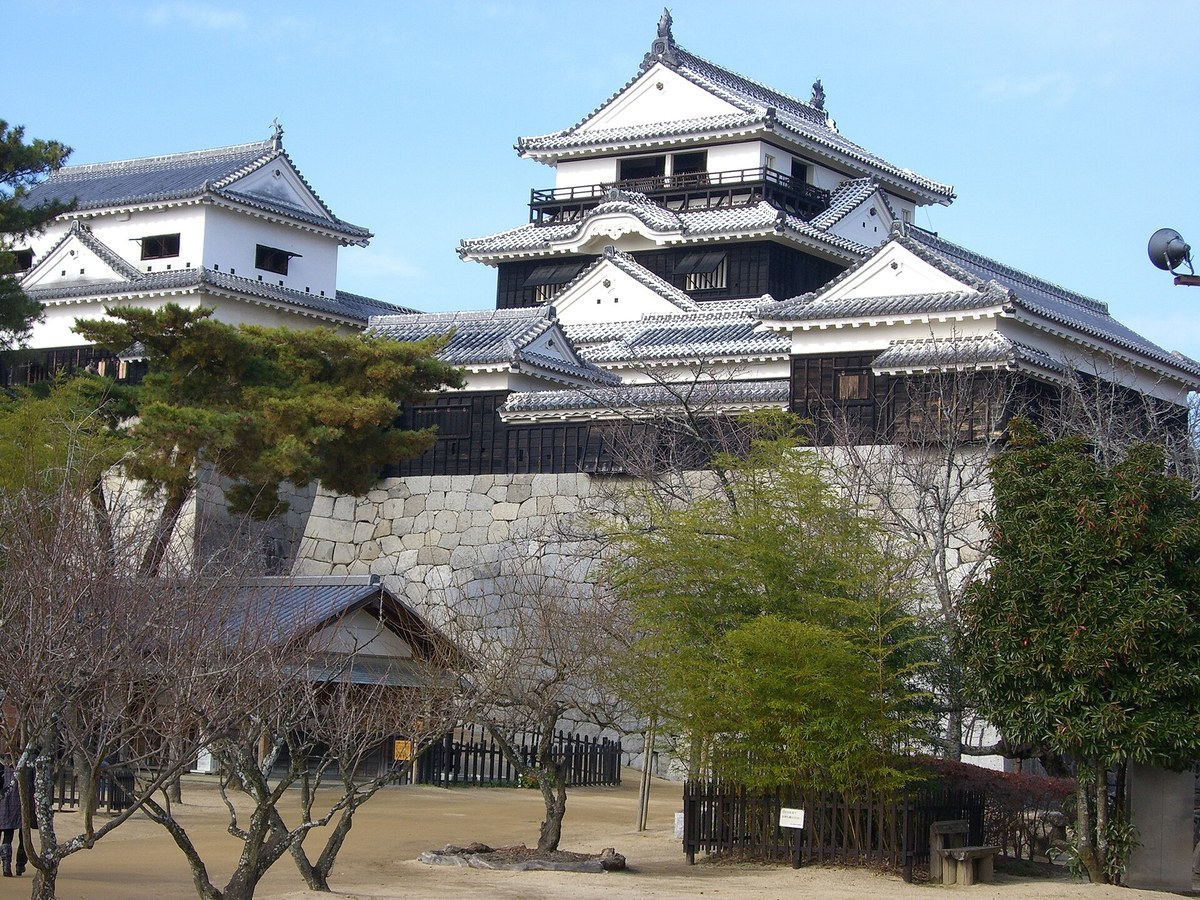
Pirates' rice and an empress's omen
Each style keeps its own origin story, and they could not differ more. Hojo's is a legend of the celebration table: Empress Jingu, stopping at Kashima on her way to campaign, prayed for victory at the Kashima Myojin shrine, and the fishermen of Kazehayaura offered her fresh sea bream from the nearby waters; she took it as a good omen, cooked rice, laid the fish on it, and was surprised by its taste. Long-established restaurants in the Hojo area — some with histories of over 150 years — still serve the dish that legend names.
Uwajima's is a working story. Its taimeshi descends from Kaizokumeshi, 'pirates' rice', also called ryoushi-meshi, fishermen's food: the meal of the Iyo naval forces based on Hiburi Island, active from the Nanbokucho period to the Edo period, who ate soy-marinated sea bream over rice aboard ship without using fire — whether from a sailor's practicality or a pirate's wish not to be seen, the dish was built to need no cooking. In 2007 the agriculture ministry chose Uwajima Taimeshi as one of its 100 Best Local Cuisines of Japan.
Why Ehime, why this fish
The prefecture's claim on the fish is statistical as well as symbolic: Ehime boasts the highest production of sea bream in Japan, farmed in the Uwa Sea bays and caught in the fast currents of the Seto Inland Sea, where the Kurushima straits' racing water firms the flesh. Sea bream is the prefecture's symbol fish, eaten all year and served at festive occasions up and down its coast.
That abundance is what makes two opposite luxuries possible. The cooked style spends a whole fish on a pot of rice — a celebration's extravagance. The raw style spends freshness itself: sashimi good enough to carry a dish with no cooking, cut and sauced to order. Travellers can eat both in Matsuyama, where Uwajima-style specialists have long kept shops in the capital, and compare the prefecture with itself in a single day.
Eating both styles
In Matsuyama, Gansui Honten on Okaido is the Uwajima-style reference: its first generation inherited the authentic Uwajima tradition in 1946 and the family has kept it since. Its menu, at the May 2025 reading, prices Uwajima taimeshi at ¥1,800 with farmed sea bream and ¥2,400 with wild, with a wild-and-farmed tasting set at ¥2,200 — the wild fish is the splurge, the farmed the everyday bowl. Uwajima style reaches the table in five to ten minutes; the cooked Hojo style, cooked to order in its pot, takes twenty to forty, and the guides' ranges run ¥1,500–2,500 for Matsuyama style and ¥1,800–3,000 for Uwajima style across the city.
For the cooked style, eat it where the pot is the menu — the long-established restaurants of the Hojo district, or the Matsuyama specialists such as Akiyo (Akika) that serve both styles side by side — and order it first, because the pot sets the meal's pace. The cooked style also travels as station bento in Ehime; the raw style cannot travel at all, which is rather the point of it. Neither style is sold as a packaged product by its makers: this is restaurant food, ordered by the style's name.
Sources — checked 12 November 2026
- Food in Japan — Tai meshi: history, recipes and restaurants (updated 9 November 2026)
- Food in Japan — Uwajima Taimeshi (checked 12 November 2026)
- Japan Travel Note — Gansui Honten: authentic Uwajima tai-meshi at Matsuyama's historic sea bream restaurant (menu prices as of 31 May 2025)
Original prose and official links only; no source text or maker media reproduced. Photos are credited Creative Commons works, not product photographs.
Editorial review 2026-11-12