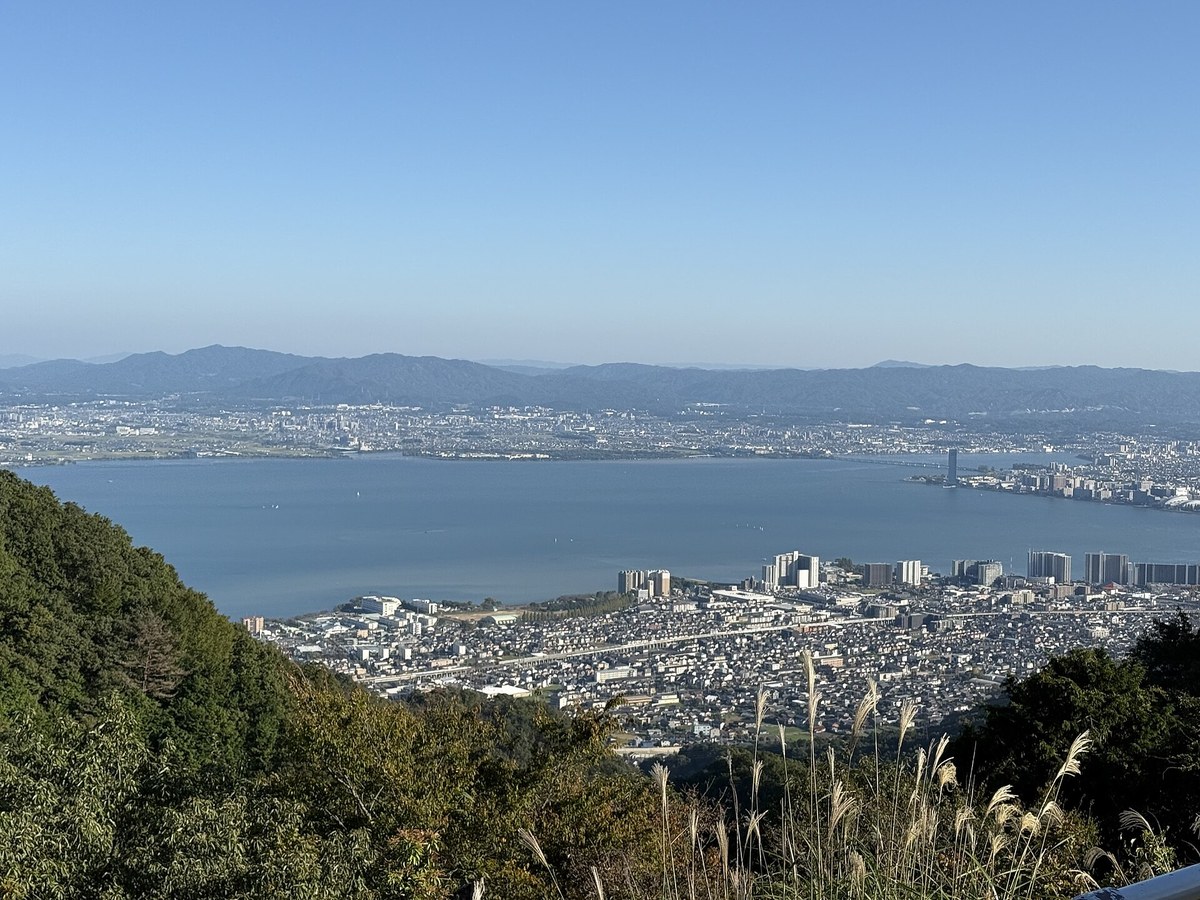
Japan has many famous fish; it has very few that exist in exactly one place. The Biwa masu is one of them: a salmonid that evolved in Lake Biwa — an ancient lake, millions of years old — and in the wild lives nowhere else. In 2025 taxonomists formally recognised what Shiga had always said, describing it as a species of its own, Oncorhynchus biwaensis. It grows to half a metre of salmon-pink, toro-rich flesh, is counted among the lake's eight delicacies, and is protected by prefectural rules strict enough that a wild fish under 30 centimetres may never be sold at all.
A species of one lake
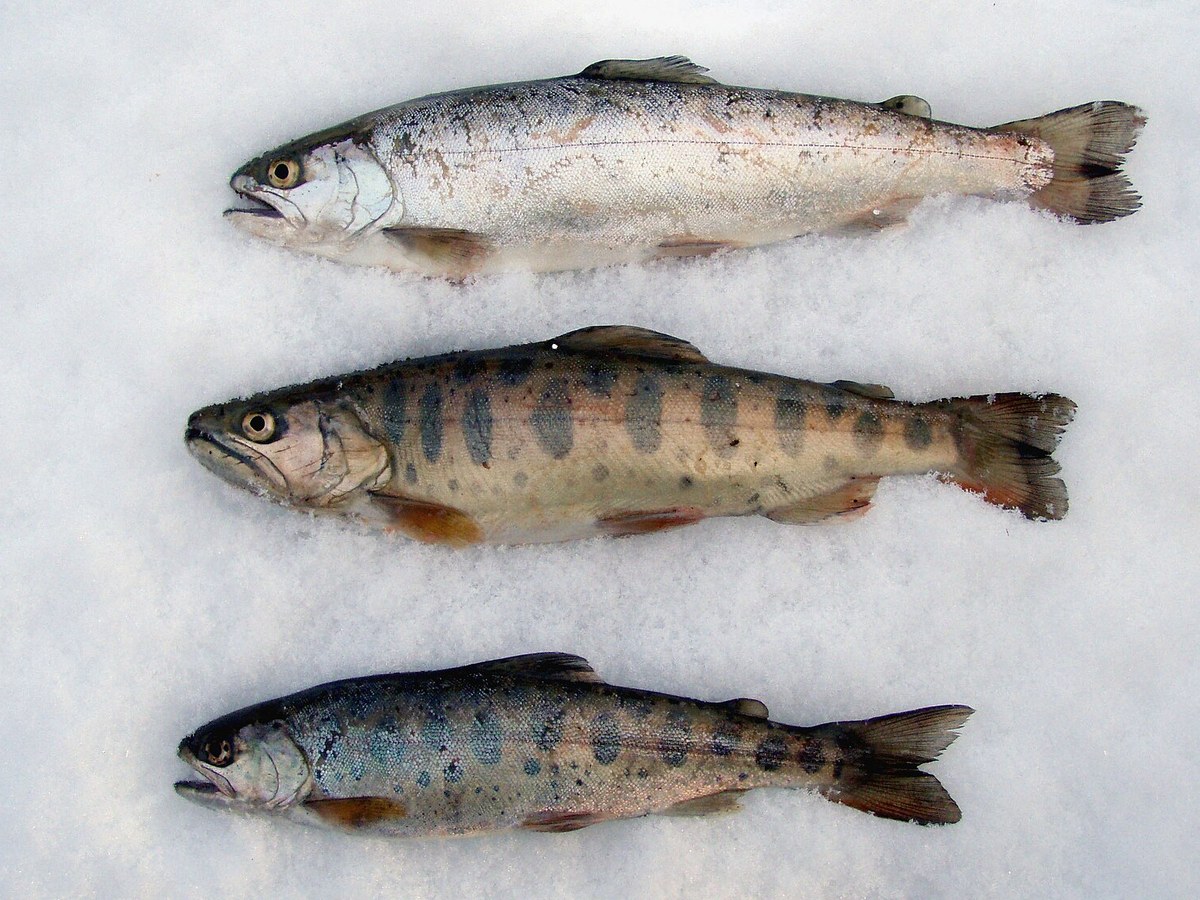
The species record is unambiguous about the address: the Biwa trout is endemic to Lake Biwa in Shiga Prefecture, and the wild fish is found only in the waters of the lake's northern basin, feeding on plankton, freshwater prawns, aquatic insects, worms, ayu and other small fish. Adults usually run 40 to 50 centimetres and 1.5 to 2.5 kilograms, with large specimens to 70 centimetres and five kilograms.
The name changed under it recently, and the article keeps both: long classed as a subspecies of masu salmon (Oncorhynchus masou rhodurus), the Lake Biwa fish was described in 2025 by Fujioka and colleagues as a separate species, Oncorhynchus biwaensis — the 'Biwa salmon, a new species endemic to Lake Biwa'. A four-million-year-old lake had been keeping its own salmon all along; science filed the paperwork in 2025.
Protected by size and season
Rarity is managed, not just admired. The aquaculture record carried by the national press states the regime: the fish is quasi-endangered (near-threatened), its catch is restricted, and no wild fish of 30 centimetres or under may be taken — so the wild fish that reach market are all over 30 centimetres and go mainly to sashimi — and October and November, the spawning run up the inlet rivers, are a closed season for the wild fish entirely.
The same record shows the prefecture farming its way around its own law, lawfully: in a closed school building in Tsuchiyama, Koka — a city that does not even touch the lake — about 16,000 Biwa masu are raised in closed-cycle land aquaculture from fry supplied by the prefectural Samegai trout farm, the small fish (about 10 centimetres at two months for tempura, 16–18 centimetres at six months for salt-grilling) sold as 'Koka Biwamasu Sasayuri' precisely because wild fish that size may never be sold.
The jewel of the lake's eight delicacies
Shiga files the fish among the Biwako Hasshin, the eight delicacies of Lake Biwa, alongside funazushi's nigorobuna and honmoroko. The species record describes the eating: the fish and its caviar are considered a delicacy, the flesh a vivid salmon pink, prepared as sashimi above all — the big wild fish — and also grilled with salt, in meuniere, smoked, deep-fried or simmered; the roe, smaller than salmon ikura and cleaner-tasting on the local accounts, is pickled in soy or salt as a rarity.
It is also, the record notes, famously difficult to catch by angling — a fish the lake gives up to its licensed nets in season, not to casual effort, which is part of why the farmed supply matters to the restaurants of Shiga and Kyoto that serve it.
Eating Biwa masu
The checked price record is the dish the farmed fish made possible: at the Tsuchiyama Service Area food court on the Shin-Meishin Expressway in Koka, the 'Tsuchiyama Biwamasu Soba' — farmed Koka Biwa masu simmered sweet as kanroni over warm soba — has been sold since 1 September 2026 at ¥1,890 including tax, on the railway company's release as reported in the national press. In season, lakeside cities such as Nagahama, Hikone and Otsu serve the wild fish as sashimi at the inns and restaurants of the lake shore, and the farmed sashimi-grade fish (raised to 40–50 centimetres) reaches Shiga and Kyoto kitchens year-round.
What to check on any menu: wild or farmed, and the calendar — a 'wild Biwa masu' served in October or November contradicts the closed season, and one under 30 centimetres contradicts the size law. The farmed Koka fish is the honest small fish; the law itself tells you so.
Sources — checked 12 November 2026
- Biwa trout — species record (Wikipedia, after Fujioka et al., Ichthyological Research, 2025)
- Asahi Shimbun — 'Jewel of Lake Biwa' Biwa masu farmed in a Koka school building (16 October 2026, search reading)
Original prose and official links only; no source text or maker media reproduced. Photos are credited Creative Commons works, not product photographs.
Editorial review 2026-11-12