Japan has older temples than tea gardens — but not by much, if Asamiya's tradition is believed. In a high district of Shigaraki, on the border where Shiga meets Kyoto, tea bushes grow at up to 550 metres on slopes that average 18 degrees, in gardens the local makers trace to a planting by the monk Saicho in the year 805. Twelve centuries later Asamiya is still counted among Japan's five famous teas, and its leaves are still picked by hand from the same cold hillsides.
Saicho's seeds, the emperor's cup
The maker's official account tells the origin as the district tells it. It is said that Asamiya tea was started 1,200 years ago in the Heian period, in 805, when Saicho — the founder of the Tendai sect — planted tea on Mt. Iwatani, and that the tea was presented to the imperial court in 815. The tour account corroborates the shape of the story: Asamiya tea was first planted by the monk who established Hieizan Enryakuji Temple, who brought tea seeds back from Tang-dynasty China, and the farms here comprise one of the original Japanese tea-growing districts, with a 1,200-year history.
Tribute made the reputation durable. The maker's page records that Asamiya tea made its name as a tribute tea and received high praise from across the country, including the Minister of Agriculture, Forestry and Fisheries Award — an ancient court connection carried into the modern prize list. The district keeps its relics: a monument to the origin of Asamiya tea stands at Iwataniyama Kannon Senzenji Temple, and Basho's haiku about hiding in the trees to listen to the tea picking is quoted on the maker's page.
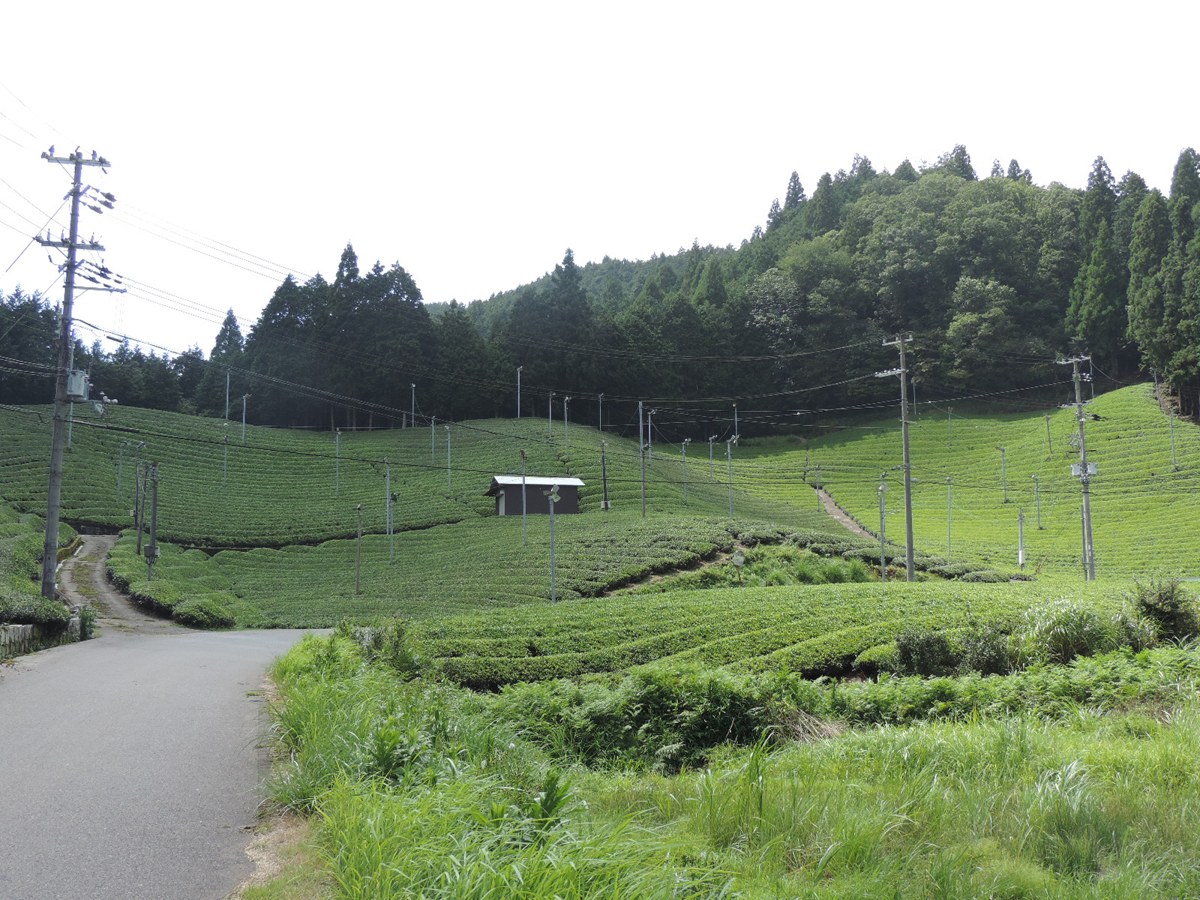
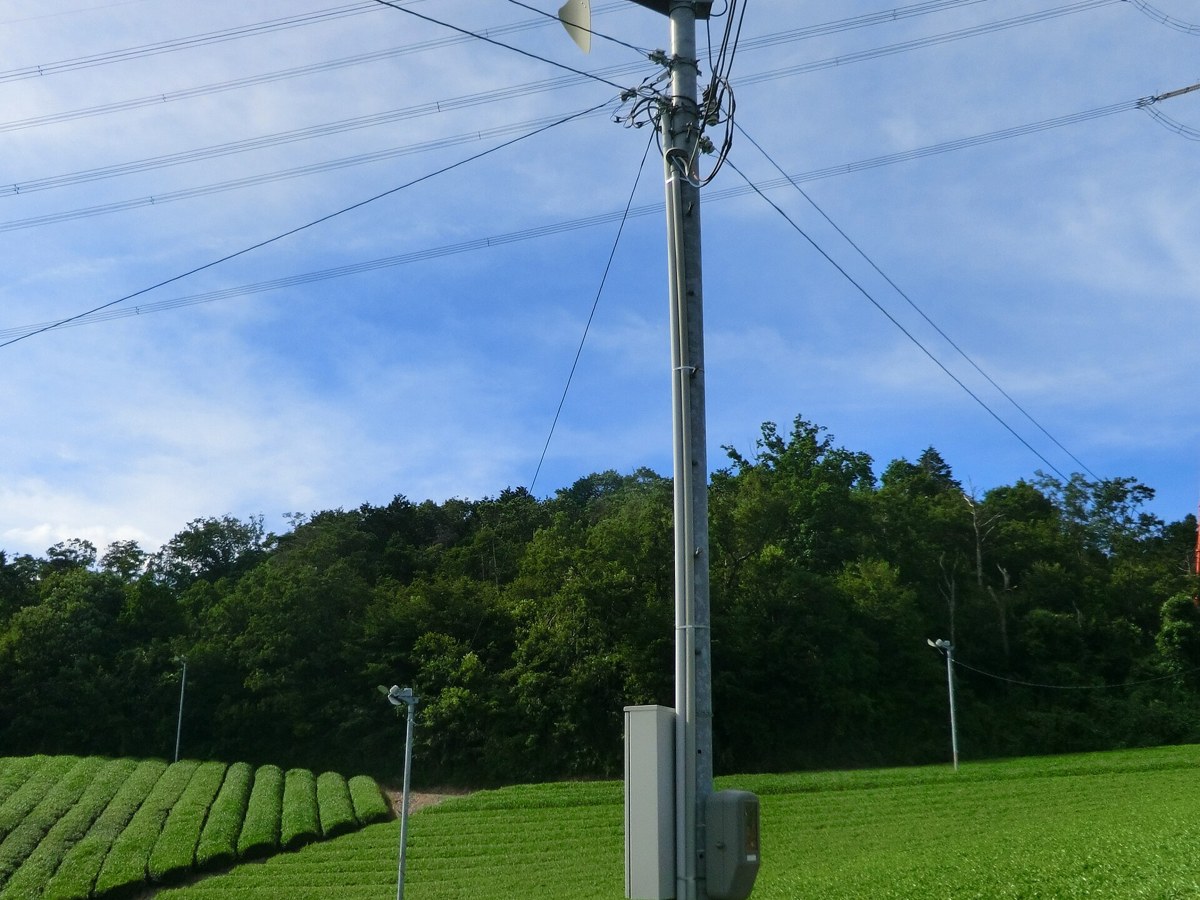
A tea field in the sky
The geography is the maker's first argument. Asamiya sits on the prefectural border between Kyoto and Shiga at a high altitude of 450 to 550 metres; most of the district is mountainous slope with an average inclination angle of 18 degrees, wearing — in the maker's phrase — a cool scent under harsh natural conditions, with clean water and atmosphere. The tour account calls its tour of the district, simply, the tea field in the sky.
Altitude is the flavour mechanism. Because the tea grows more slowly up there, the tour account explains, the buds can obtain enough nutrition to create a deep aroma and a mellow flavour, with the traditional golden yellow colour the maker also names — Asamiya tea brews bright yellow. The harvest, the maker's page adds, is carefully picked and carefully made using traditional methods, and the tea is characterised by its aroma and flavour — the unique aroma that rises from the leaves themselves.
The name only one house may use
Inside the district's small world there is a finer distinction. The maker's page notes a sencha that bears the name Asamiyaen — and that it has been said only Maruyasu Tea Industry can use that name among the many teahouses. The house's own Asamiya tea is its representative product, presented as a gem deserving to be called the highest peak of green tea, and a popular item for gifts and for private use alike.
The leaves repay patience in the pot. Asamiya tea, the maker explains, has a lot of energy stored in its leaves, so it can be drunk many times: where ordinary leaves are thrown away after one or two brewings, Asamiya's — brewed a little cooler — can be drunk up to four to five times. For drinkers who want volume instead, the same house makes a fragrantly roasted Asamiya blend that does not turn bitter even in boiling water — the tea, it admits, that producers and teahouses drink most themselves.
What a pack costs
The checked retail record fixes the shelf price. Katagi Koukaen, a Shigaraki garden that makes and sells its Asamiya tea direct, sells its Asamiya-cha sencha Asatsuyu in a 100 g pack at ¥1,470 including tax on the checked retailer's page — ordinary sencha money for a tea with a tribute-tea pedigree.
That is the Asamiya proposition in one line: a famous-tea name with a 1,200-year story, sold by the hundred grams at ordinary sencha prices by the gardens that grow it. The scarcity is not manufactured; it is the size of one steep district on a prefectural border, and it has not grown since 805.
Sources — checked 11 November 2026
- Maruyasu Tea: About Asamiya Tea (checked maker account)
- Tour du Lac Biwa: Asamiya — the Tea Field in the Sky (checked tour account)
- Yodobashi: Katagi Koukaen Asamiya-cha Sencha Asatsuyu 100 g (checked retail record)
Original prose and official links only; no source text or maker media reproduced. Photos are credited Creative Commons works, not product photographs.
Editorial review 2026-11-11