Tsuyama traded cattle for centuries, so Tsuyama eats the whole animal. Its horumon udon fries beef offal — small intestine, heart, senmai, mino — with udon on a great iron plate in a spicy miso tare: a meat town’s working lunch that took the Silver Grand Prix at the same B-1 Himeji final where Hiruzen took gold.
A cattle town eats everything
Old records place a cattle market at Tsuyama, and the city sat on the movement of cattle and horses through the mountains of the Chugoku range. A meat town learns the offal first: what could not be sold as cuts became the butchers’ and working people’s food, and Tsuyama’s freshness advantage was absolute — offal slaughtered the same morning, with none of the smell that gives horumon a bad name elsewhere.
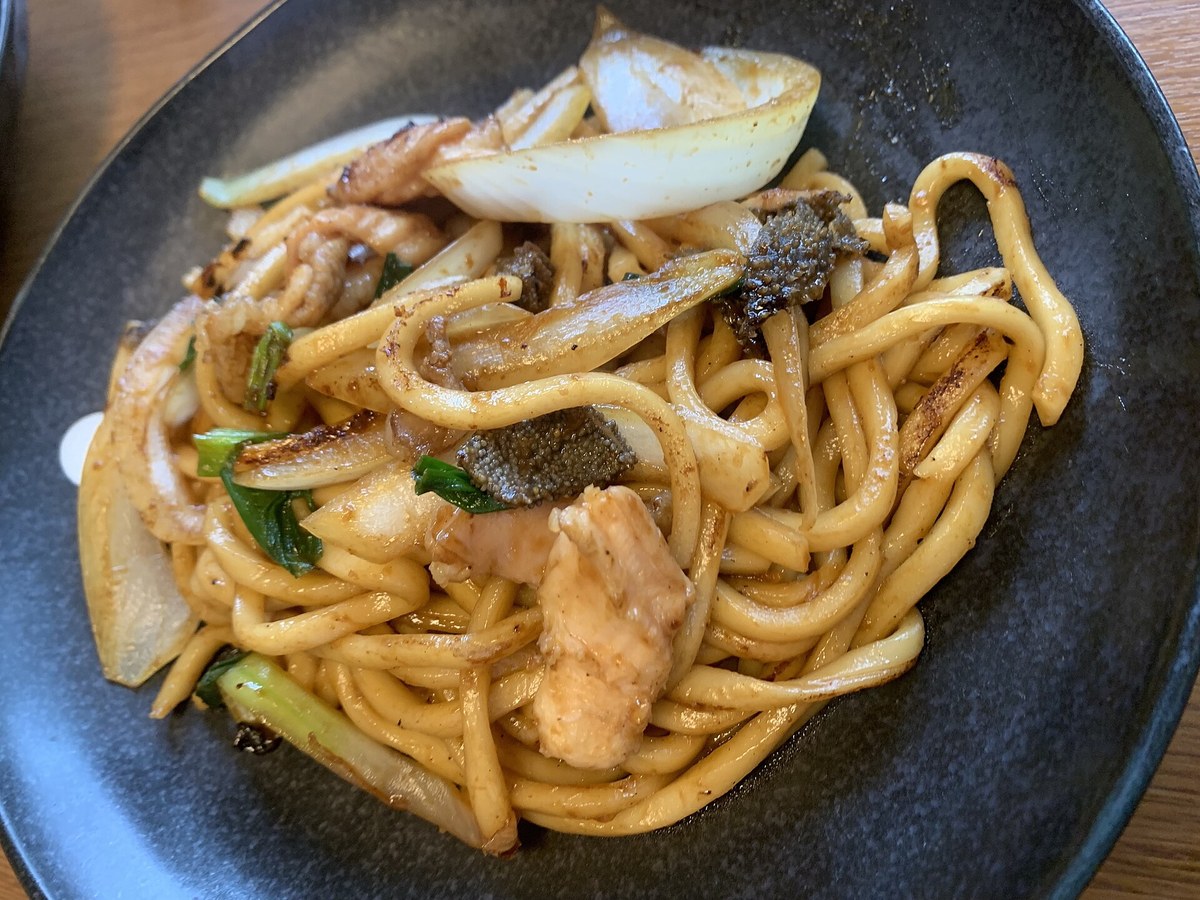
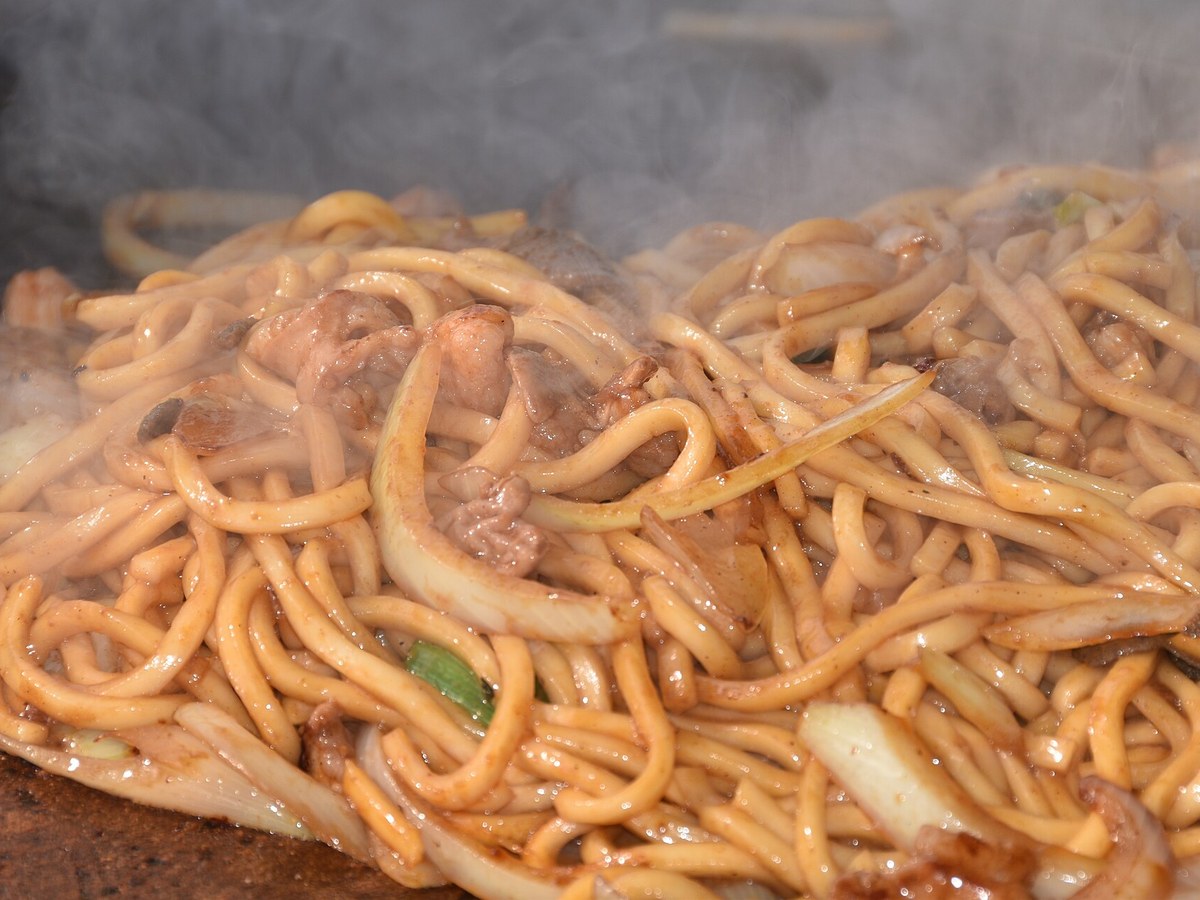
Fried with udon on the teppan, it became the city’s standard plate: on the guide record, more than fifty teppan shops in Tsuyama serve horumon udon today. The vegetables are deliberately few — moyashi and negi — because the plate is about the offal and the tare, not the garnish.
Hashino Shokudo: the 1884 standard
The best-known house is Hashino Shokudo in Kawasaki, eastern Tsuyama — founded in 1884, holder of a Michelin Guide Plate in the 2021 Kyoto-Osaka-Okayama guide, and the shop the research society’s map treats as the dish’s reference. Its tare is a house miso sauce handed down through the generations, offered in three heats — regular, pirikara and gekikara — and the house record insists on Okayama ingredients throughout.
Hashino’s standard serving is two balls of udon with the mixed offal; a one-ball order exists for smaller appetites, and on the listing read for this story the two-ball plate is ¥890. The offal mix — small intestine, heart, senmai and mino among them — is the point: each cut cooks to a different chew, and the tare’s fat coats every strand.
The research society and the silver medal
Tsuyama organised late and well: a horumon-udon map committee formed in 2005 to eat its way across the city’s shops, and in 2007 it became the Tsuyama Horumon Udon Research Society, charged with carrying the dish nationwide. The society’s map is the dish’s census — shop by shop, tare by tare.
At the sixth B-1 Grand Prix in Himeji in November 2011, Tsuyama’s plate took the Silver Grand Prix — second in Japan — at the same final where Hiruzen, from the same prefecture’s north, took gold. Okayama’s two northern meat-and-plateau dishes stood first and second on the same day, a prefectural one-two no other county town pair has matched on the B-1 record.
Eating it on the iron
Order it where the plate is iron and the cook works in front of you: the teppan shops and shokudo of Tsuyama, Hashino first among them. Choose your heat honestly — the gekikara grade is a local boast, not a tourist dare — and expect the plate to arrive still spitting, the udon dark with tare and offal fat.
There is no meaningful take-home form: bottled tare exists, but the dish is the morning’s offal on the day’s iron, and Tsuyama’s own promotion treats the city’s fifty shops as the destination. Go to Tsuyama; the plate is the souvenir you eat there.
Sources — checked 14 November 2026
- Gourmet Note — Horumon udon in Okayama and Tsuyama (research society, Hashino Shokudo)
- Okayama gourmet guide — Tsuyama horumon udon and Hashino Shokudo
Checked 14 November 2026 (stored links re-fetched and judged per product): reserved where the page says so, with an editorial review note kept per product. Press, PR and travel use stays outside the grant.
Editorial review 2026-11-14