Sapporo’s soup curry began as medicine. In 1971 the founder of the curry house Ajanta cooked a restorative soup — some thirty spices and fifteen kampo ingredients on a family recipe said to be two hundred years old — to bring his ailing father back to strength. It had nothing in it. Four years later a regular asked why the chicken that flavoured it was being thrown away, and the medicine became a bowl: thin, fiery soup, a whole chicken leg, vegetables in chunks, rice on the side. Sapporo has been arguing happily about it ever since.
1971: a son cooks his father a medicine
The HBC investigation and the standing record agree on the starting point. Ajanta, a Sapporo Indian-curry house, was founded by Tatsujiri Muneo, who had learned spices in India; in 1971, for a father laid low by illness, he built a soup on the family’s restorative recipe — about thirty spices and fifteen kampo ingredients in a chicken-and-vegetable stock, with no flour and, at first, nothing served in it at all. It went on the menu as yakuzen curry, a medicinal soup, and customers drank it as one.
About 1975 came the turn every Sapporo curry cook can recite. The whole chicken that had given the soup its body was being discarded; a regular said the obvious thing — if you are throwing it away, let me eat it — and the stock remains, bone-in chicken and vegetables, went into the bowl and stayed. The prototype was complete: a clear, spice-forward soup carrying its ingredients in pieces, eaten with rice served apart.
Su-age, a name, and a ramen city’s second soup
The form kept being edited by its shops. In 1985 the newly opened Soup Curry Kitaro first served the vegetables deep-fried — su-age — a step its owner defends as dehydration: a fierce, brief frying that seals each vegetable’s flavour and texture in before the soup. In 1993 Magic Spice’s Shimomura Taizan, back from travelling Southeast Asia, adapted Indonesia’s soto ayam and gave the dish the name it now answers to: soup curry. The name is the recipe’s whole manifesto — it is a soup first, and a curry by its spices.
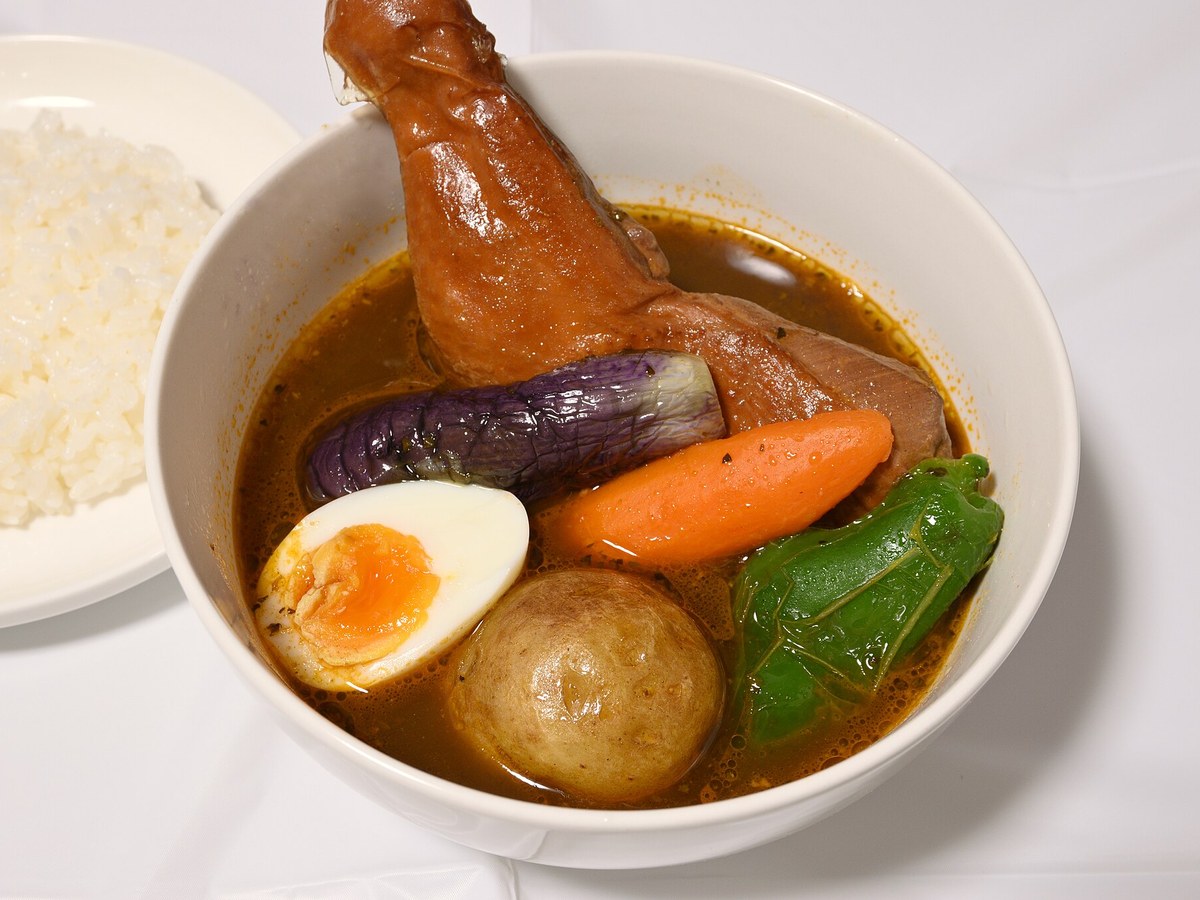
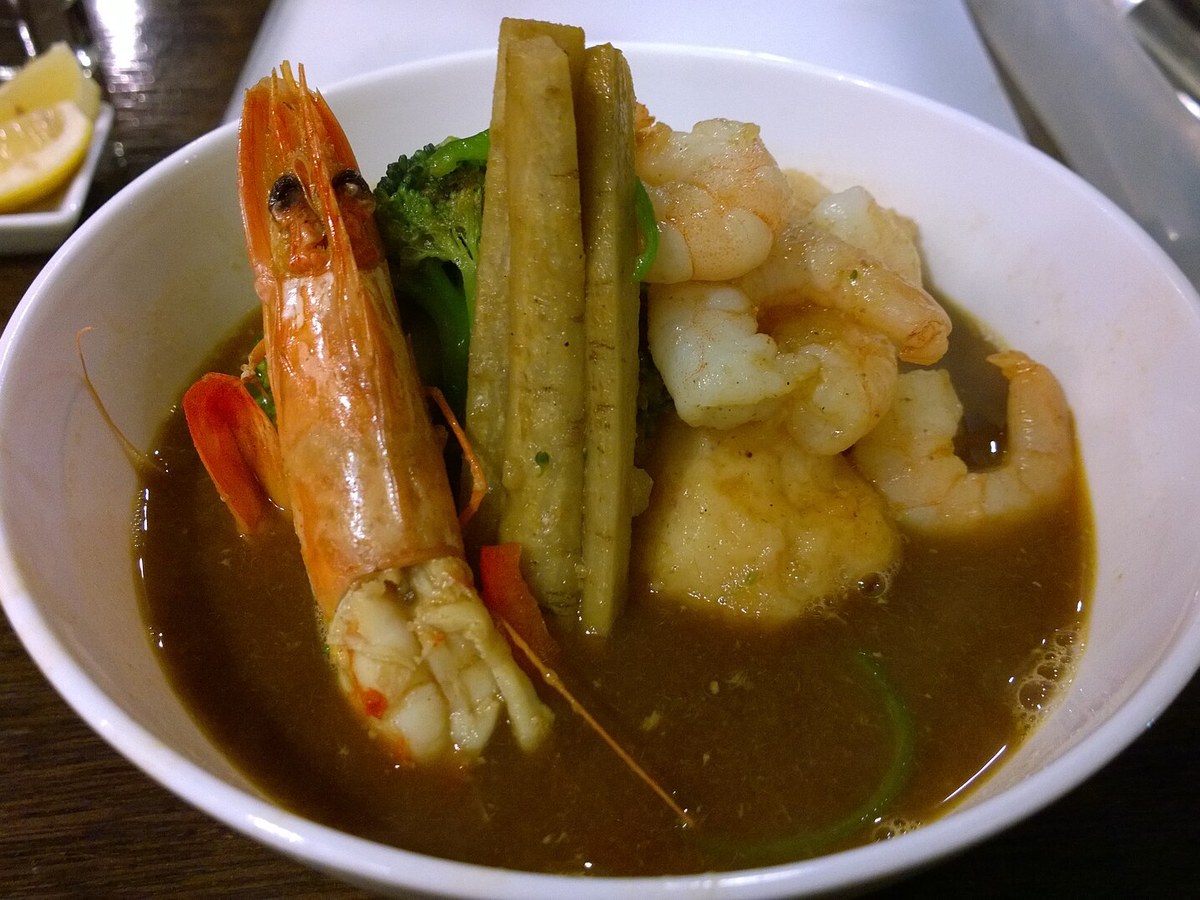
Why Sapporo? The HBC record asks the city’s own readers and gets a ramen answer: Sapporo was already a soup culture, a city that judged a bowl by its broth, and soup curry was received as a second native soup rather than a foreign curry. Crucially, there has never been a definition to join — no association certifies a soup curry — so the dish speciated freely: chicken, pork, seafood and vegetable soups, spice levels run like ramen heat scales, every shop a dialect. This story’s photographs are two dialects: a chicken-leg bowl with its egg and whole potato, and a seafood bowl under a whole prawn.
The official afterlife: 100-Year Food
The dish’s standing is no longer just local pride. Sapporo soup curry has been recognised under the Agency for Cultural Affairs’ “100-Year Food” programme — the national register of food cultures intended to be carried a century forward — a status the HBC investigation reports alongside its origin findings. For a bowl invented within living memory, by named cooks in named shops, that is the formal version of what the queues already say.
The practical culture stays gloriously unstandardised. Order by soup, then by main ingredient, then by heat: the scale is each shop’s own (at GARAKU, below, it runs to forty), the rice comes on its own plate for dipping and drowning as you choose, and the chicken leg is expected to surrender to a spoon. A thickened, roux-built curry soup is the one thing it is not: the soup must stay a soup.
A bowl, priced: GARAKU
Soup Curry GARAKU, founded in Sapporo in 2007 and one of the modern standard-bearers, prices the canonical bowl at its main shop — the menu read in October 2026 — as follows: the tender chicken leg and vegetables at 1,480 yen including tax, and the fried chicken-leg version at 1,530 yen including tax. Spice runs from level 1 to 40, the first five levels free; the soup is built on chicken, pork bones and dashi with some thirty ingredients and twenty-one blended spices.
Two photographs, two first orders, one rule for the traveller: if a Sapporo menu offers a whole chicken leg in a thin red soup with the rice beside it, you are in the right city and the right bowl. Everything else — the heat, the toppings, the shop — is the argument, and the argument is the fun.
Sources — checked 14 November 2026
- HBC Hokkaido Broadcasting — the soup curry origin investigation
- LIVE JAPAN — Why you need to try Sapporo soup curry (with the Curry City Sapporo Promotion Committee)
- Soup Curry GARAKU, Sapporo main shop — the menu as read in October 2026
Checked 14 November 2026 (stored links re-fetched and judged per product): reserved where the page says so, with an editorial review note kept per product. Press, PR and travel use stays outside the grant.
Editorial review 2026-11-14