Of Japan's three great soup flavours, miso is the youngest — and it has a birthplace. In the 1950s, in Sapporo, a former railway engineman named Morito Omiya spent years at his shop Aji no Sanpei ordering miso from all over the country and feeding trial bowls to his regulars, convinced a bowl of noodles should nourish like a meal. What came out of his wok — miso tare caramelised with stir-fried vegetables, thick curly noodles bred for the soup, a film of hot lard to seal the heat in — became Sapporo ramen, and then Japan's idea of miso ramen itself.
A bowl built in a wok
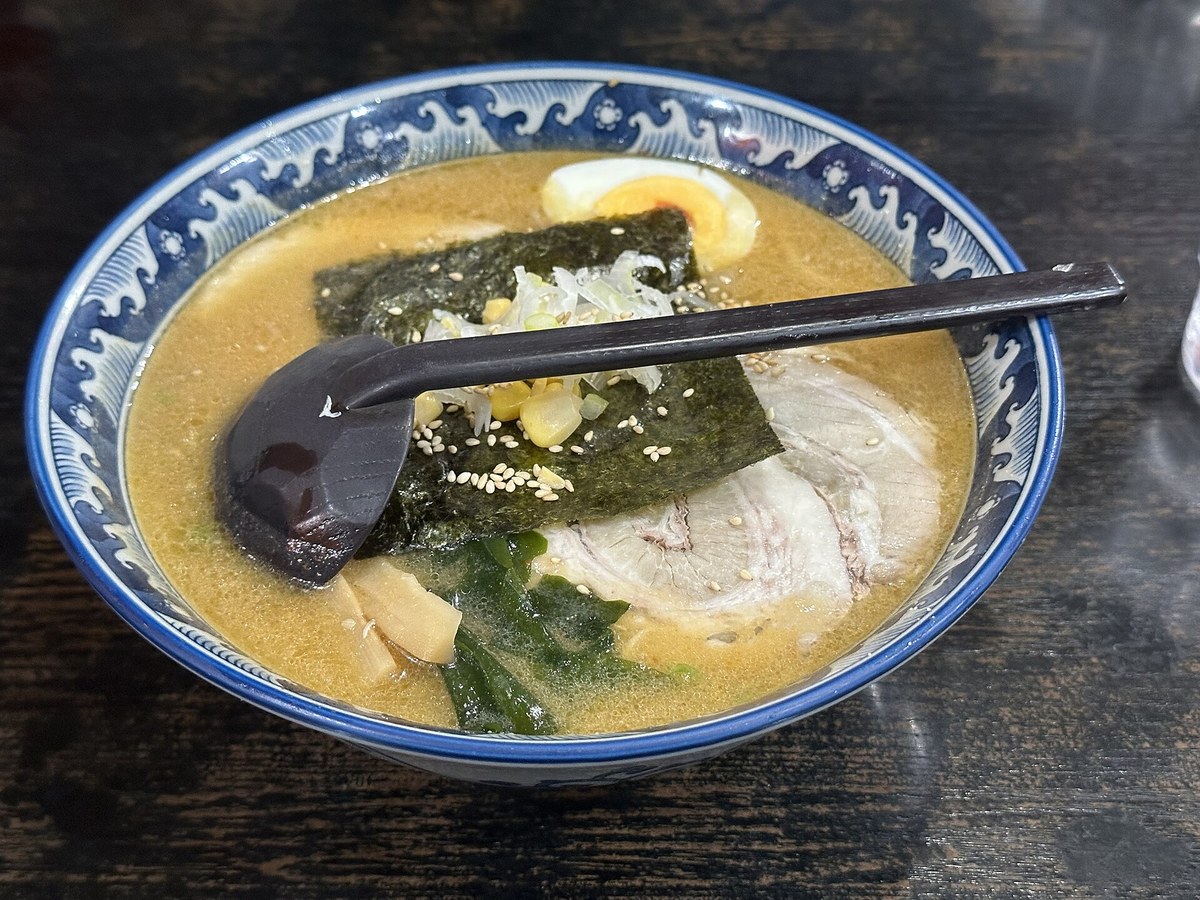
Sapporo ramen is defined by method as much as by flavour. The cook builds each bowl in a blazing wok: pork, onions, cabbage and bean sprouts are stir-fried first, the miso tare is caramelised against the hot metal, and the broth goes in over them — picking up a roasted, smoky edge no stockpot gives. A film of hot lard seals the surface, which in a Hokkaido winter is not garnish but engineering: the last sip is meant to be as hot as the first.
The noodle was designed to match. Working with Aji no Sanpei, Sapporo's Nishiyama Seimen developed a matured, high-hydration curly noodle — thick, yellow and springy, its waves trapping ribbons of the heavy soup and holding their chew while a diner works slowly through a scalding bowl. Thin straight noodles are other cities' answer; Sapporo's curl is its signature.
The engineman who fed his regulars miso
Morito Omiya had worked as an engineman on the South Manchuria Railway before he opened Aji no Sanpei in Susukino in 1950, and he brought two things home with him: a conviction that miso was healthy, everyday food — sharpened, the record says, by a magazine essay urging Japanese cooks to use miso more widely — and a cook's ease with garlic, then rare in Japanese noodle shops. For years he trialled miso from across the country and let his regulars judge the bowls.
The second generation tells the same story with the polish worn off: the base of the original miso ramen remains, but the exact recipe continues to change day by day, adjusted to the reactions of the counter in front of the kitchen. The one part of the legend the family rejects outright is the famous one — that a customer asked for noodles dropped into his miso soup. The records carry the denial, and so does this article.
A birth year the record will not fix
Ask when miso ramen was finished and the sources courteously disagree. The shop and most reference works place the completed bowl in the mid-1950s, around 1954 or 1955; the Sapporo Tourist Association instead dates it to 1958, tying it to the year Nishiyama's matching curly noodle was perfected. Both datings are printed here, because both stand in the record — the soup and its noodle were finished in the same Sapporo decade, by men working together.
The spread, at least, is dated firmly. A 1955 feature in the magazine Kurashi no Techo made Aji no Sanpei nationally famous; department-store fairs demonstrated the bowl in Tokyo and Osaka through the 1960s; the Dosanko chain began franchising the style nationwide in 1967; and the instant Sapporo Ichiban Miso Ramen launched in 1968. Within roughly a decade, miso ramen meant Sapporo everywhere in Japan.
Eating it where it was made
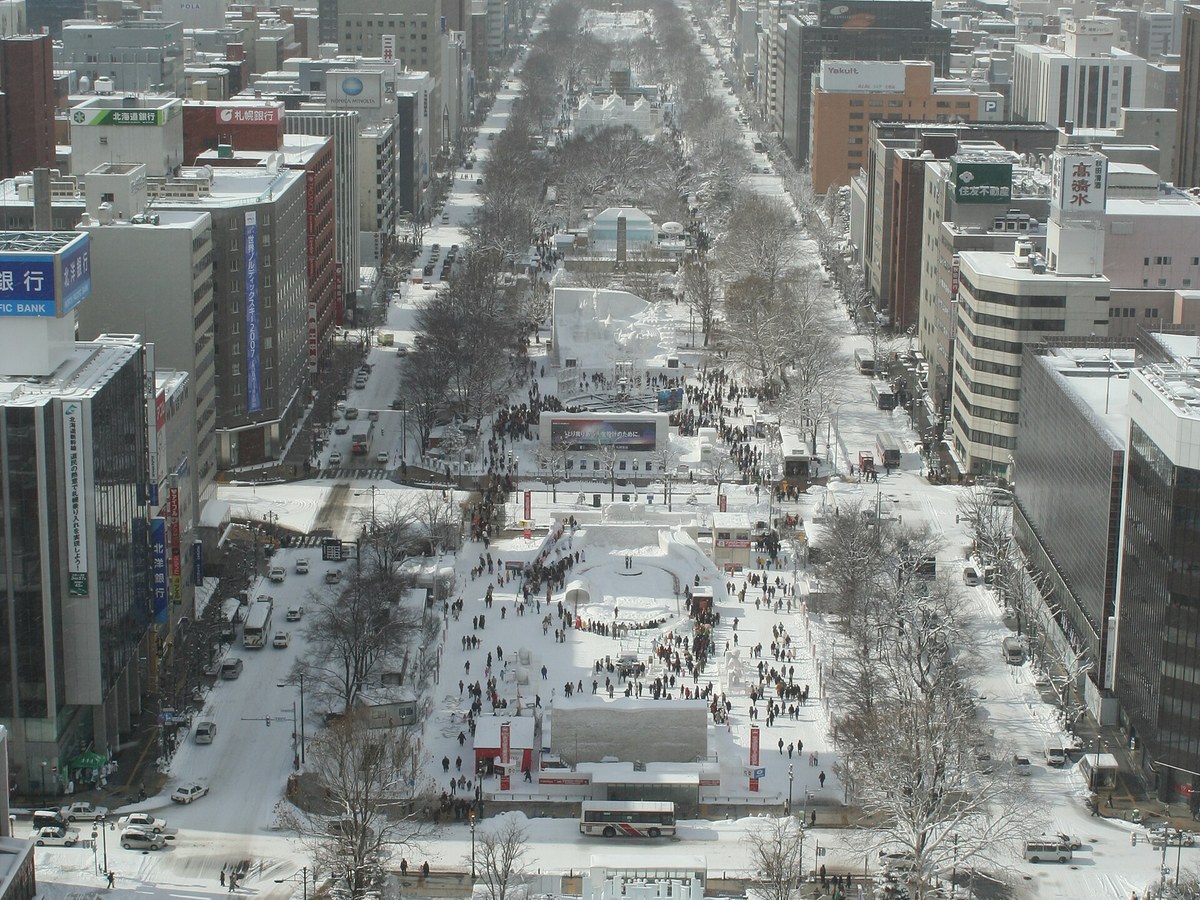
Aji no Sanpei still serves the original bowl — now on the fourth floor of a department store near Odori — at ¥850 including tax at LIVE JAPAN's reading (the guide's prices are its 2020 visit's and change), the fried vegetables and the jointly developed wavy noodles intact. The regional guide's own budget line for the shop is about ¥1,000, which tells you how gently the price has moved for a founding bowl.
Beyond the birthplace, Sapporo is a ramen battleground of hundreds of counters: the alley-born shops of Susukino, the ginger-finished bowls of Menya Saimi (¥750 at the same reading), and the butter-corn variation — sweet corn and a melting pat of butter over the miso — that travellers order first and locals defend as Hokkaido dairy and cornfields in a bowl. Order miso on a first visit; that is the local way.
Sources — checked 12 November 2026
- Food in Japan — Sapporo Ramen guide: the style, its wok method and the Aji no Sanpei history (after MAFF and food historians)
- LIVE JAPAN — Inside 3 Sapporo miso ramen shops: Aji no Sanpei, Saimi and Men-Eiji (last updated 17 August 2020)
Original prose and official links only; no source text or maker media reproduced. Photos are credited Creative Commons works, not product photographs.
Editorial review 2026-11-12