Most famous fruit is famous for how it tastes. The Yubari melon is famous for where it is not allowed to exist: anywhere else. Its Geographical Indication registration — No. 4, among the first granted under Japan's GI system — fixes the production area to a single small city in the Hokkaido hills, and the ministry's summary says flatly that the accumulated technique and cultivation control make the fruit impossible to produce outside it. Behind the legal sentence stands a tighter physical one: the Yubari King is a one-generation hybrid, and its seeds, the GI record notes, have never left Yubari City. This is the story of the seventeen volunteers who bred it, the roughly 140 farm households permitted to grow it, and the grading line every melon must pass before it may use the name.
A melon that may not leave home
The Geographical Indication system protects names whose quality comes from their place, and Yubari's entry is unusually absolute. The production area is Yubari City alone; the registered group is the Yubari City Agricultural Cooperative; and the ministry's summary concludes that producers' accumulated techniques and precise cultivation control make it 'impossible to produce YUBARI MELON outside the production area' — a claim most regional brands imply but few official records state outright.
The genetics enforce what the law declares. Yubari King is a first-generation hybrid: its eating fruit does not breed true, so the seed line is the variety, and the GI portal records that those seeds have never left Yubari. A grower elsewhere could plant a similar melon in similar soil and still not be growing this one — the variety itself is kept at home.
Seventeen volunteers and a second act
Yubari was a coal city — coal was found there in 1888 and the city prospered on mining — and the melon began as the search for what a mountain town could sell when it needed a second product. In 1960, the Yubari Melon Association was established by seventeen volunteers, and through repeated test cultivations it created the Yubari King. Between about 1965 and 1975 the city became a production centre representative of Hokkaido, and in 1979 nationwide direct-from-farm deliveries began, turning a local experiment into the country's best-known gift melon.
The cooperative form never loosened. The retail record checked for this article — the cooperative's own fruit, sold through a national shopping service — states that only about 140 farm households in Yubari may grow the melon, and that fruit failing the cooperative's standards for sugar content, weight and net pattern may not be sold under the name. Six decades after the seventeen volunteers, the gate is still the point.
Ten degrees of sugar, a net like lace
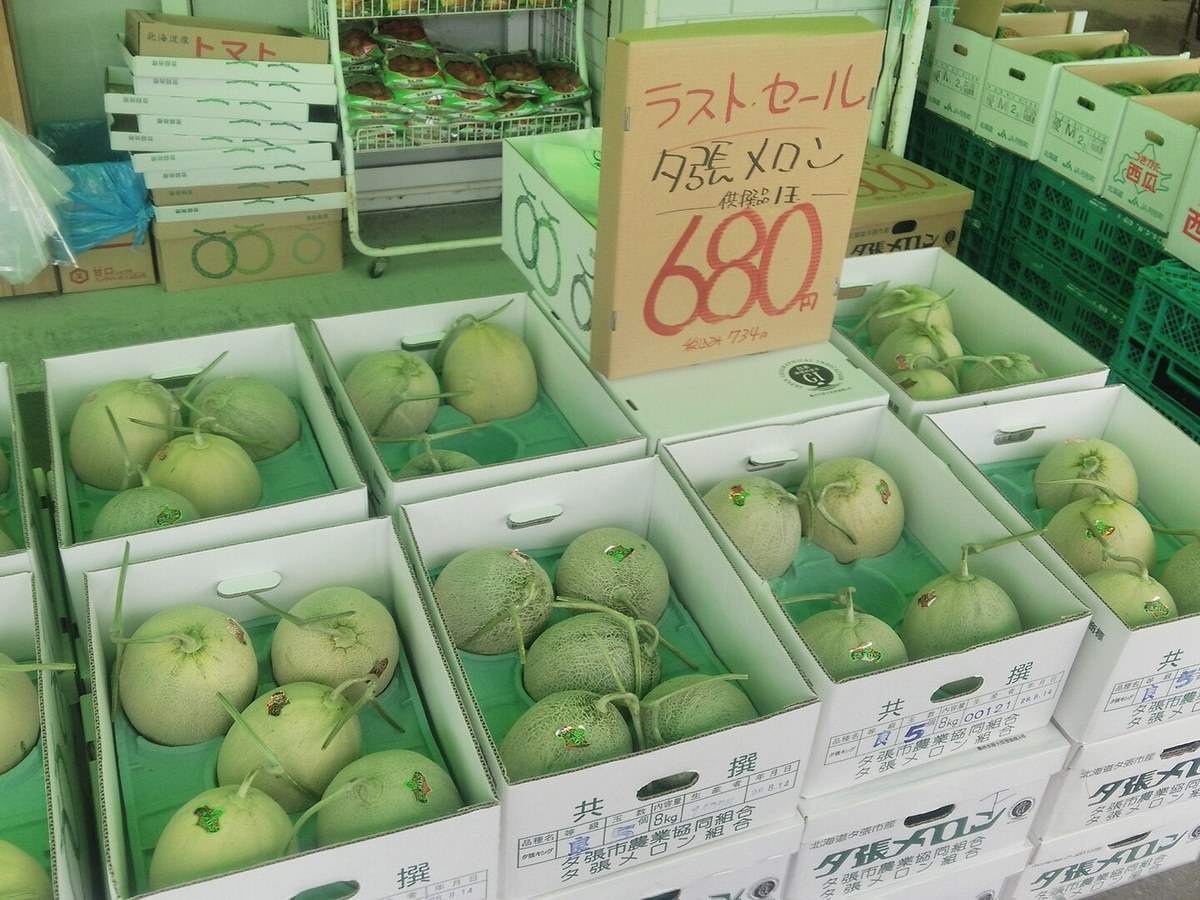
The fruit itself is described with unusual precision in the GI records: oval, 1.0 to 2.5 kilograms, wearing the fine net pattern that signals a slow, even expansion of the rind, with orange flesh that has little fibre and is 'very soft and juicy' with a 'rich, mellow flavour'. The measurable threshold is sugar: Brix of more than 10 degrees, checked before the name is granted — a brand feature describes the sorted fruit passing across four quality grades, with roundness and the ten-degree line as the floor.
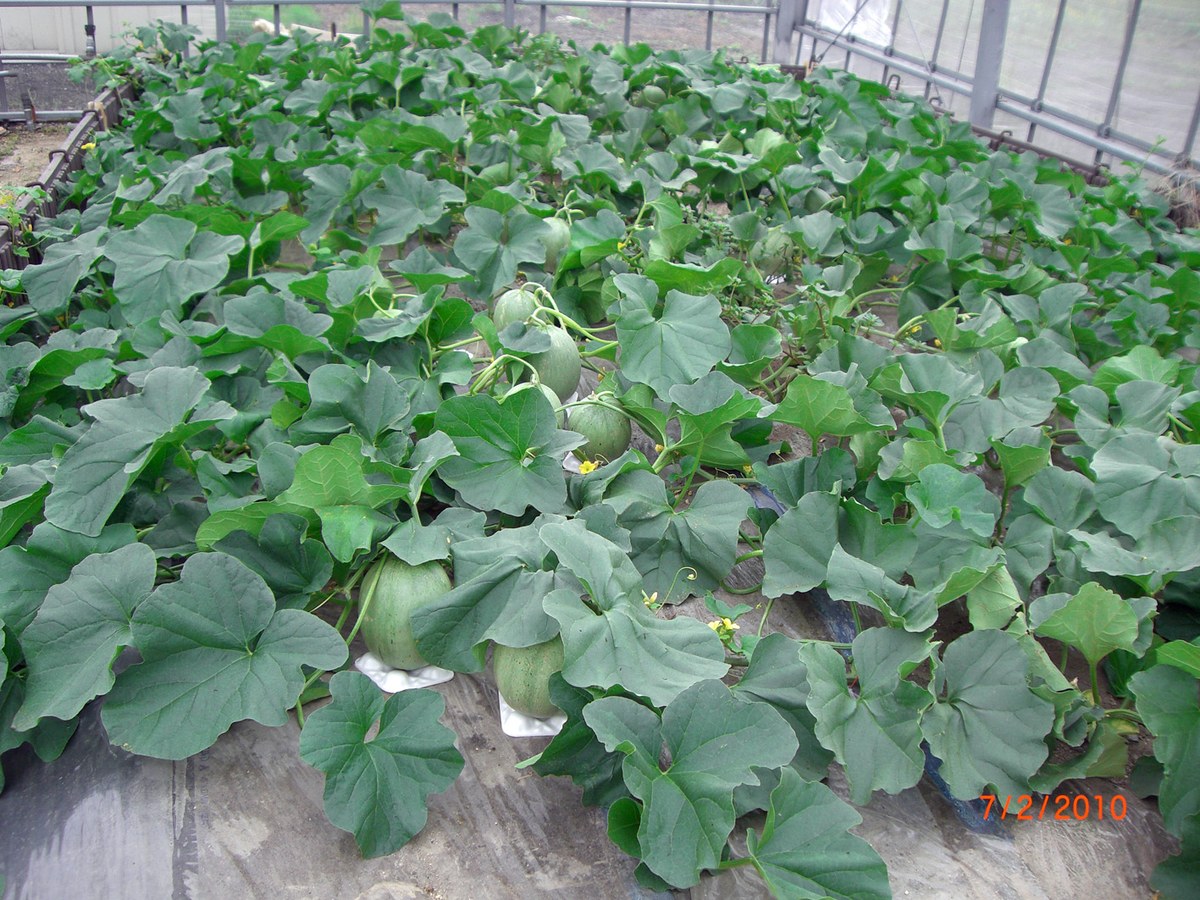
The climate writes the first draft of that sweetness. The GI portal notes the ripening season is June and July, when the gap between daytime and night temperatures reaches 10 °C or more in June and stays over 8 °C in July; rainfall is low, about 100 mm a month, and the city's well-drained volcanic-ash soil — a gift of Mount Tarumae — keeps the roots dry. Mountains ring the fields on every side, which is also why the production area could be drawn so small: the bowl is the boundary.
The two-melon box
The standard retail form is the gift box: the listing checked here offers two cooperative-selected melons of the yupin (excellent) grade, about 2.0 kilograms each, boxed and shipped directly by the Yubari City Agricultural Cooperative at ¥11,949 including tax and shipping. Lesser and greater grades exist on the same ladder, and single-melon boxes appear in season, but the pair in a presentation box is the canonical purchase — this is Japan's archetypal summer gift fruit, priced like one.
Timing is the hard part. Shipping peaks in June and July and the season closes in early August; the listing checked in November had ended sales for the year. Buyers outside Japan should treat the melon as a travel purchase — eat it in Hokkaido in season, where farm stands and the city's own melon outlets sell graded fruit by the piece — and read any off-season 'Yubari melon' offer as melon-flavoured goods (jellies, soft serve, sweets) rather than the GI fruit itself, which does not exist in November at any price.
Sources — checked 11 November 2026
- Ministry of Agriculture, Forestry and Fisheries — GI Product Summary, Yubari Melon (Registration No. 4)
- GI product information site — Yubari Melon (Registration No. 4)
- d Shopping (Docomo) — Hokkaido Yubari Melon, cooperative-selected yupin, 2 melons (checked 11 November 2026)
- Glico Pocky local feature — Yubari Melon, Part 1 (read via search)
Original prose and official links only; no source text or maker media reproduced. Photos are credited Creative Commons works, not product photographs.
Editorial review 2026-11-11