Before 1887, Japan had no towels — not as a manufactured article. Imported towels existed, but as costly accessories; everyone else wiped water away with bleached tenugui cloth. The change came from a cotton town in southern Osaka: Enjiro Satoi, a textile man of the Sano district (present-day Izumisano City), studied the imported article, built a loom that could weave the looped pile, and produced the first towels made in Japan. The economy ministry's Kansai bureau dates the Senshu towel from that year and calls the district the birthplace of Japan's towel industry; a hundred and thirty-odd years later the mills still weave there, still finishing every towel the Senshu way — washed after weaving, absorbent from the day it is bought. This is the method's story, and a working ¥2,198 way to test it.
1887: the loom that started an industry
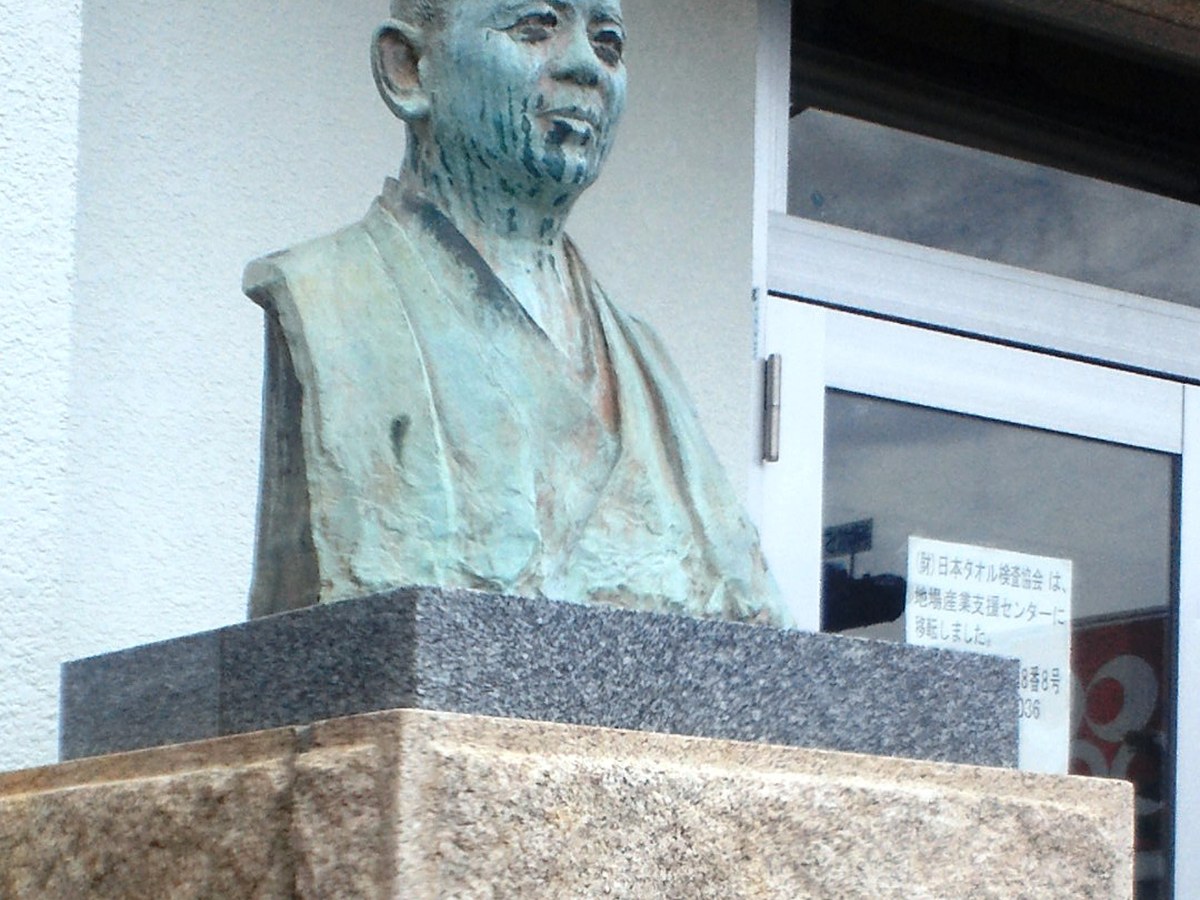
The brand association's own history sets the scene: in the late nineteenth century the towel arrived in Japan as an expensive import, worn almost as an accessory, while ordinary households managed with thin tenugui. Enjiro Satoi, who ran a cotton-textile business in Senshu, took the imported towel apart in his mind, successfully created a towel loom, and wove the first towels produced in Japan — the act the ministry's regional-brand page dates to 1887 and from which it counts the towel's roughly 130-year history.
The ground was prepared. The Sano region — today's Izumisano — had grown cotton and worked textiles for generations, so skills, yarn trade and water were already in place when the loom appeared. Senshu's claim, endorsed by the ministry, is therefore not merely 'old towels' but the industry's origin point: Japan's other towel capital, Imabari, built its fame later and on a different finishing method, which is exactly the contrast the next section draws.
Washed after weaving: the atosarashi method
The Senshu signature is a reversal of the usual order. In the after-bleaching method — atosarashi — the mills apply paste to the raw yarn, weave the fabric with the cotton's natural oils and the weaving impurities still in it, and only then bleach the finished cloth, washing everything out in the final stage. The association's explanation of the result is practical: because the oil and impurities leave at the end, even a brand-new Senshu towel absorbs water well from its first use, with no break-in period of push-water-around-the-plate disappointment.
The ministry adds the skin-side consequence: washed after weaving, the towels gain high water absorbency and a soft texture, gentle enough for babies and sensitive skin. The method is also the leaner industrial process — fewer steps than bleaching the yarn first, and less water and energy consumed — and the mills filter their wash water to above general standards before it returns to Osaka Bay. Method, hand-feel and effluent are one story here: the finish is the product.
The water of the Izumi mountains
Ask the association what makes a Senshu towel and it starts, before looms, with water: towels have been made for over 130 years in Senshu 'with the blessings of the water of the Izumi Mountains', the range that walls the district's eastern side. Groundwater is drawn from 200 metres underground and flows continuously through the making — the same soft supply that the cotton trade before the towel trade depended on for washing and finishing.
Water explains method as much as geography does. After-bleaching is a washing technology: it works because the mills can flood finished cloth with clean water and trust the result. A towel town is therefore never just a loom town; it is a watershed with looms in it, and Senshu's 130 years are the Izumi foothills' years as much as Izumisano's.
The everyday article
What the method produces is a deliberately un-luxurious towel: moderately thin rather than hotel-thick, quick to dry, compact to store and easy to wash — the association notes its popularity at beauty salons and public baths, workplaces that launder towels by the hundred and cannot wait on thick pile. At home the same traits make it the daily towel rather than the guest towel, which suits a birthplace brand: the first towel town's towel is the working one.
The reference purchase checked here is as plain as the product: a five-pack of Hayashi face towels, made in Osaka's Senshu, 100 percent cotton at 34 × 85 cm and 80 grams per towel, sold through the industrial-supply retailer MonotaRO at ¥2,198 for five including tax, dispatched within four days. For gifts and the full brand range, the association's own shop and the towel museum-shops of Izumisano carry the certified lines; for testing the method, five working face towels at this price are the honest experiment.
Sources — checked 11 November 2026
- METI Kansai — Regional brand support: Senshu Towel
- SENSHU TOWEL — Osaka Towel Industrial Association brand site (English)
- MonotaRO — Hayashi 'Made in Japan Senshu Face Towel, set of 5' (checked 11 November 2026)
Original prose and official links only; no source text or maker media reproduced. Photos are credited Creative Commons works, not product photographs.
Editorial review 2026-11-11