Okinawa's glass is beautiful because it began as rubbish. After the Battle of Okinawa destroyed the island's workshops in 1945, its glassmakers rebuilt the trade with the only material at hand — empty cola and beer bottles discarded by US bases — and the melted mixture came out thick, vividly coloured and full of tiny bubbles. The flaws became the signature: Ryukyu glass, designated an Okinawan traditional craft in 1998, sold in studios across the island, with finished glasses at ¥1,000 to ¥3,000.
1900, 1945, and a rebirth in bottles
Glass reached Okinawa through trade early, and its own glassmaking began around 1900, when artisans from Kagoshima brought the craft south; by 1909 a modern factory stood in Naha. The Battle of Okinawa in 1945 shattered the industry along with the island. What revived it was scarcity met with wit: US service members and their families needed tableware, raw glass was unobtainable, and the bases were discarding bottles by the thousand.
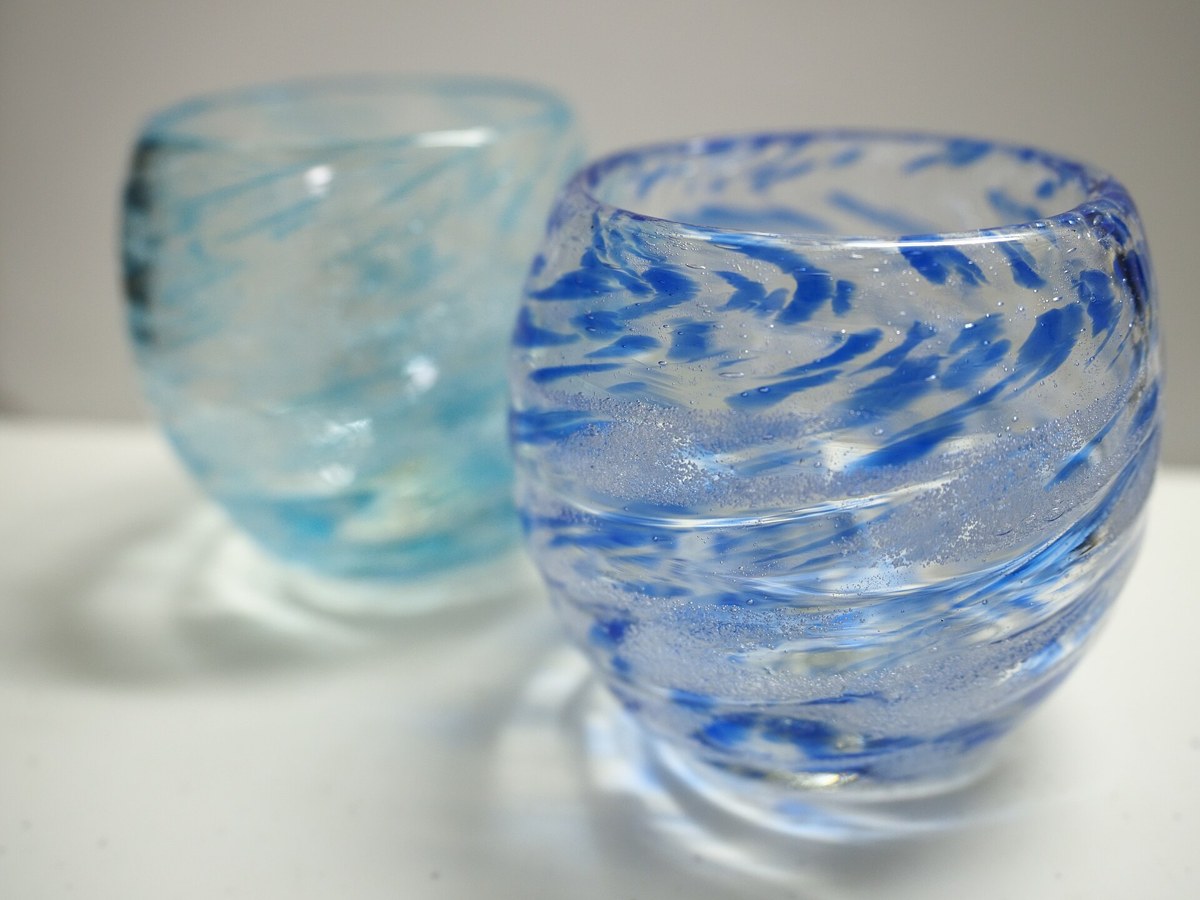
Melted down, the mixed bottle glass — green, amber, clear, with labels and impurities — produced exactly what fine glassmaking avoids: bubbles, streaks and uneven, saturated colour. Okinawa decided to love it. The thick, bubbled, sea-coloured ware became the islands' glass, and the recycling that necessity imposed became the tradition that studios still honour, now alongside new materials.
Free-blown, thick-walled, full of air
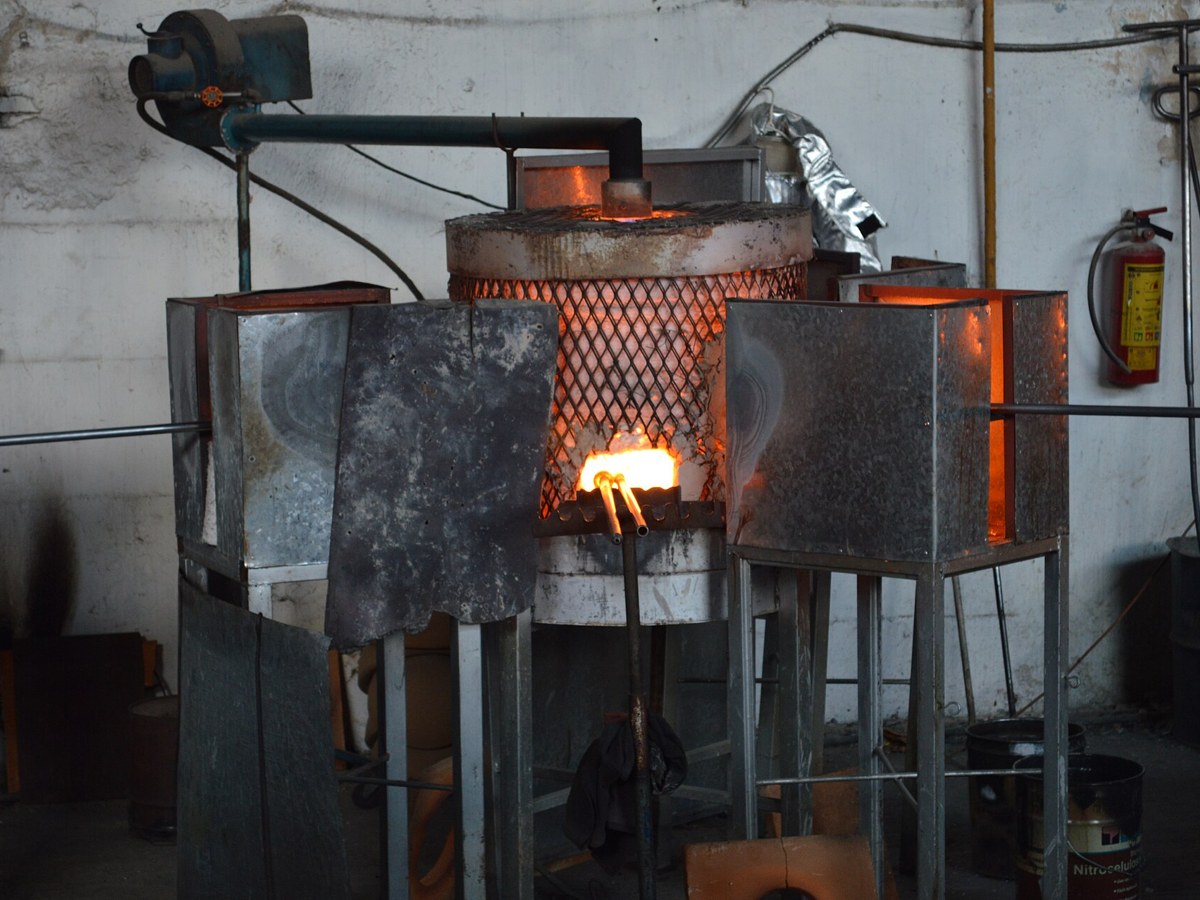
Ryukyu glass is free-blown: molten glass gathered on a pipe, rolled, blown and shaped by hand at furnaces reaching about 1,400 degrees, without moulds — so every piece carries its maker's breath and small variations. The palette is the islands': ocean blues and greens, sunset reds, the amber of old beer bottles, in glasses and tumblers thick enough to feel cool and solid in the hand.
The bubbles are not decoration added afterwards; they are the recycled material's memory, trapped as the glass was worked. Modern studios also fire new glass and add colour deliberately — the sources are candid about the mix — but the aesthetic standard remains the postwar one: colour like the sea over reef, and air caught in the wall.
Practical details: prices, workshops, where to buy
Prices (checked 2026-11-09): finished glasses and tumblers typically run ¥1,000 to ¥3,000, plates and bowls ¥2,000 to ¥5,000. The largest venue, Ryukyu Glass Village in Itoman — established 1985, about twenty artisans, admission free — runs glassblowing experiences at ¥4,400, the cooled piece shipped to you days later; studios across the island offer experiences roughly between ¥2,000 and ¥4,400 by programme.
Where to buy: the studios of Okinawa Island — Itoman's Glass Village, Nago's Mori no Garasu-kan, Onna's studios — for pieces watched being made, and craft shops across the prefecture; Tokyo has Ryukyu glass shops too, as the sources note. Type of edition: regional edition — a designated traditional craft of Okinawa Prefecture.
The other glass island
This collection now holds Japan's two great regional glass stories, and they rhyme: Aomori's Tsugaru Vidro was born when fishing-float blowers turned to tableware, and Okinawa's Ryukyu glass when bottle recyclers did. In both, an industry ended and the skill refused to — but where Tsugaru chased colour in a hundred shades, Ryukyu kept the bubbles, the thickness and the sea.
Blow your own if the itinerary allows it. The piece that arrives in the post a few days later — slightly uneven, full of air, unmistakably yours — is the craft's whole history in one object: made from what was at hand, in Okinawa, by hand.
Scope: what 'limited' means here
Ryukyu glass is documented as Okinawa's free-blown glassware — its postwar bottle-recycling origin, its 1998 prefectural traditional-craft designation and its studio production — per the cited sources. Nationwide sales and modern new-glass production are stated. Checked 2026-11-09.
Sources — checked 9 November 2026
- Jeepe: Ryukyu glass Okinawa — postwar craft, workshops and souvenirs
- AloJapan: Glass act — Ryukyu Glass Village, Itoman (Cabinet Office history; blowing ¥4,400)
- Voyapon: Okinawan glass — where to make your own glass art in Okinawa
Original prose and official links only; no source text or maker media reproduced. Photos are credited Creative Commons works, not product photographs.
Editorial review 2026-11-09