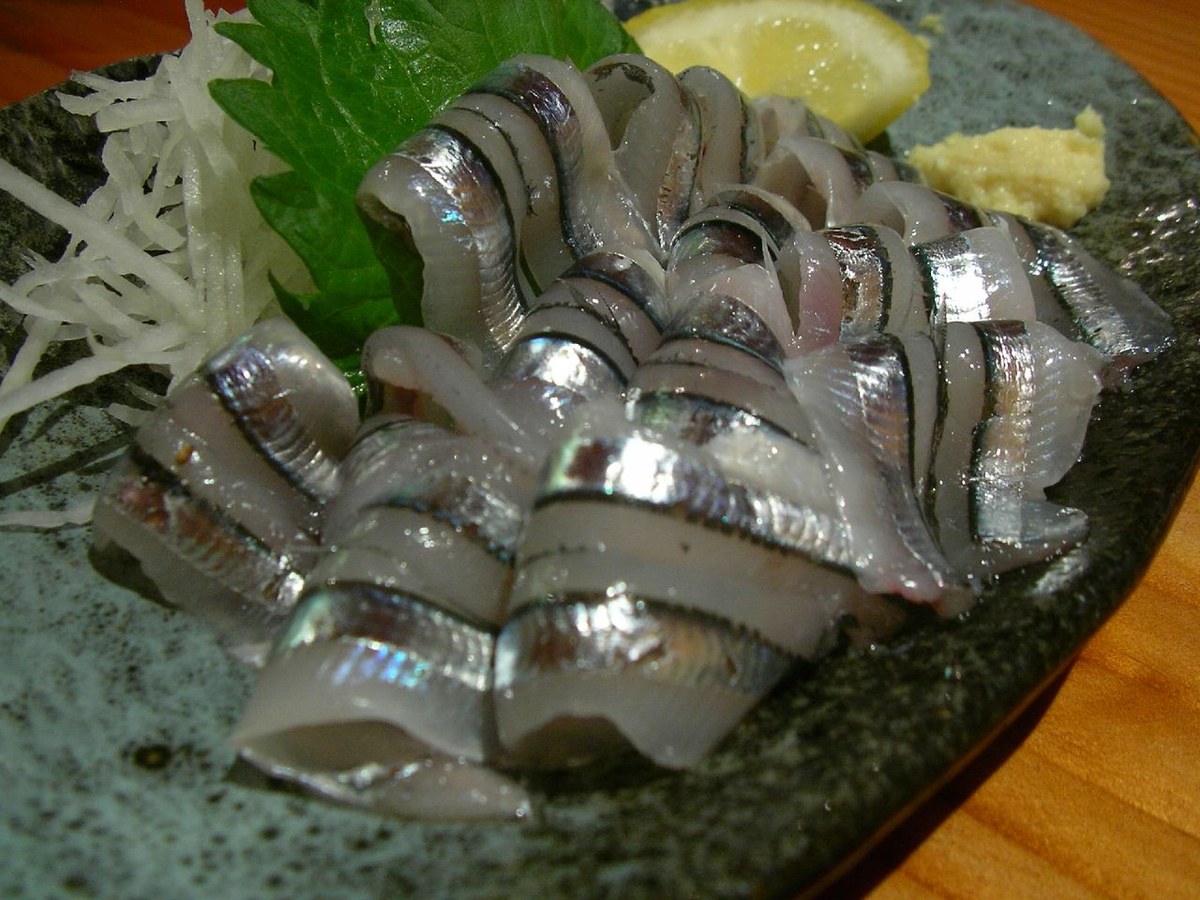
Kibinago is a ten-centimetre herring with a silver band down its side and scales so loose they are gone by the time it lands. Most of Japan meets it cooked, if at all. Kagoshima meets it raw — hand-opened the moment it lands, fanned like chrysanthemum petals, and dipped not in soy sauce but in vinegared miso: a sashimi that only a landing place can serve.
A sashimi only the landing place can serve
The fish itself is small and brief: Spratelloides gracilis, about ten centimetres at adult size, a broad silver band along the flank with a dark blue line above it, and round scales so loosely attached that after landing they are mostly gone, leaving the silver band and the translucent flesh exposed. It schools in clean coastal water across the tropical and subtropical Indo-Pacific and lives fast — half a year to a year on the record.
That brevity is exactly why the sashimi is local. Kagoshima City’s own account of the dish says it plainly: kibinago spoils fast, and eating it as sashimi is the landing place’s privilege. The preparation is handwork — the head taken off, the fish opened with the fingers along the backbone — and the arrangement has a name: kikka-zukuri, the chrysanthemum making, the little fish laid out like petals.
Vinegared miso, not soy sauce
The Kagoshima rule is the dip. The agriculture ministry’s Our Local Cuisine record for “kibinago no sashimi”, Kagoshima Prefecture, builds the vinegared miso in a mortar — barley miso ground with vinegar and sugar, a touch of sake — and portions the dish at forty fish for four servings: ten small herring a person, which is the correct unit for a fish this size. Soy sauce is not forbidden; it is simply not the dish. The sweet Kagoshima miso and the vinegar cut the oil of a herring and leave the silver freshness standing.
The name, on the compiled account, is the fish’s portrait in dialect: kibi, a band, for the silver stripe; nago, a small fish. On Amami Oshima the same fish answers to surun — a reminder that the southern islands of the prefecture have their own long history with it.
The Koshiki ground and the seasons
The noted ground is the Koshiki Islands, the chain off Satsumasendai on Kagoshima’s west coast, credited on the compiled record with more than twenty per cent of the national kibinago catch. The fish is landed all year, which is why Kagoshima can treat it as an everyday luxury rather than a season’s event; the ministry’s calendar adds the nuance — early spring fish carry roe before spawning and are plump, while autumn fish, out of the spawning season, are fatty and firm.
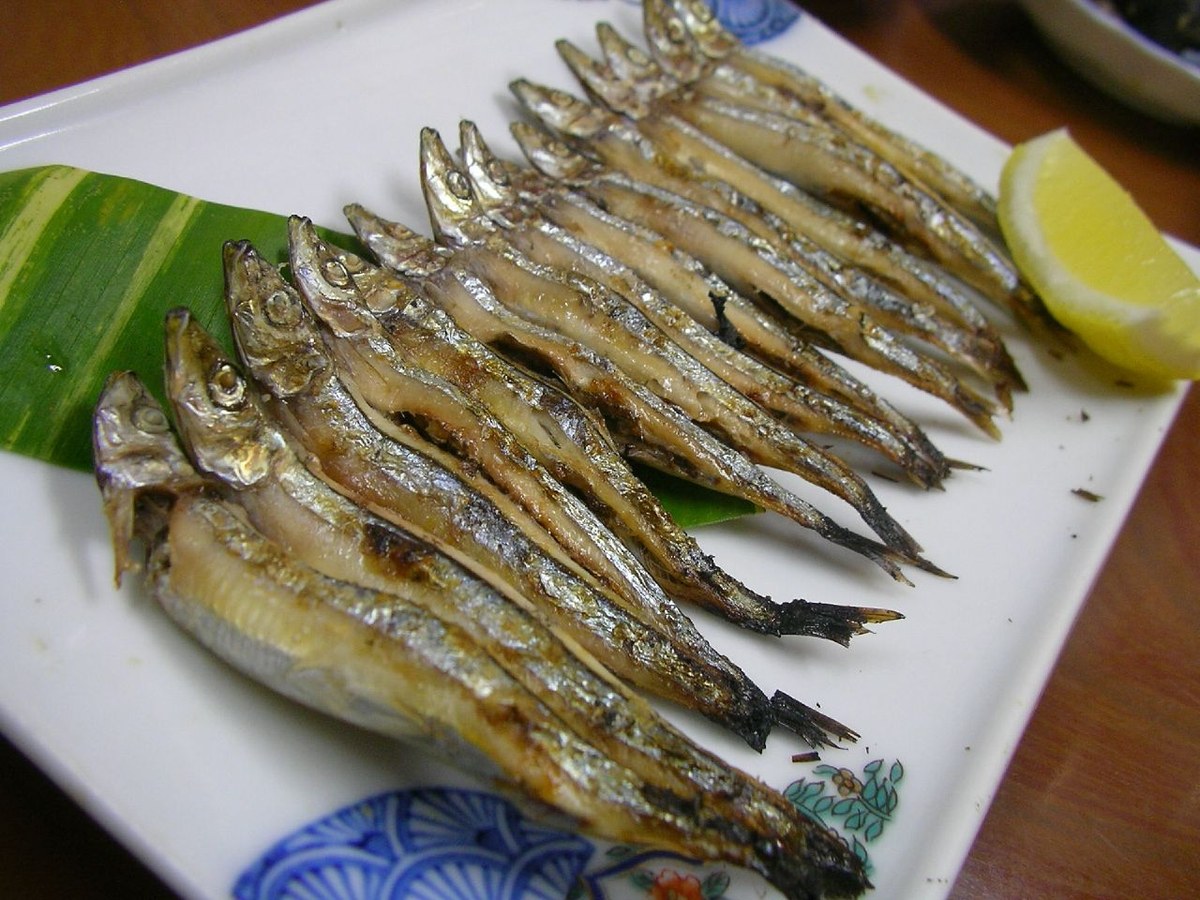
Beyond the sashimi, the prefecture cooks the whole fish every way a small herring allows: salt-grilled and eaten whole from the head, tempura, simmered, fried. The grilled plate in the second photograph is the other pole of the dish — no hand-opening, no petals, just the banded fish crisped entire.
Reading the market board
Eat it where it lands: the local-cuisine restaurants and izakaya of Kagoshima City serve the chrysanthemum plate, and the direct-sale fish shops at the ports — Satsumasendai’s fisheries-cooperative market among them — will make up sashimi platters from the morning’s fish. The freshness test is printed on the fish: the brighter the silver band, the fresher the kibinago.
The wholesale board shows what that freshness costs at source. On Kagoshima City Central Wholesale Market’s fish-market price list for 5 November 2026, read for this story, kibinago from Kagoshima landings — 360 kilograms in that morning — traded at a high of ¥2,000, a mid of ¥1,200 and a low of ¥1,020 a kilogram: a small fish, priced like the delicacy its home prefecture knows it is.
Sources — checked 14 November 2026
- Kibinago — encyclopedia record (the fish: band, scales, range, life)
- MAFF “Our Local Cuisine” — kibinago sashimi, Kagoshima Prefecture
- Kagoshima City Central Wholesale Market — fish market price list, 5 November 2026
Checked 14 November 2026 (stored links re-fetched and judged per product): reserved where the page says so, with an editorial review note kept per product. Press, PR and travel use stays outside the grant.
Editorial review 2026-11-14