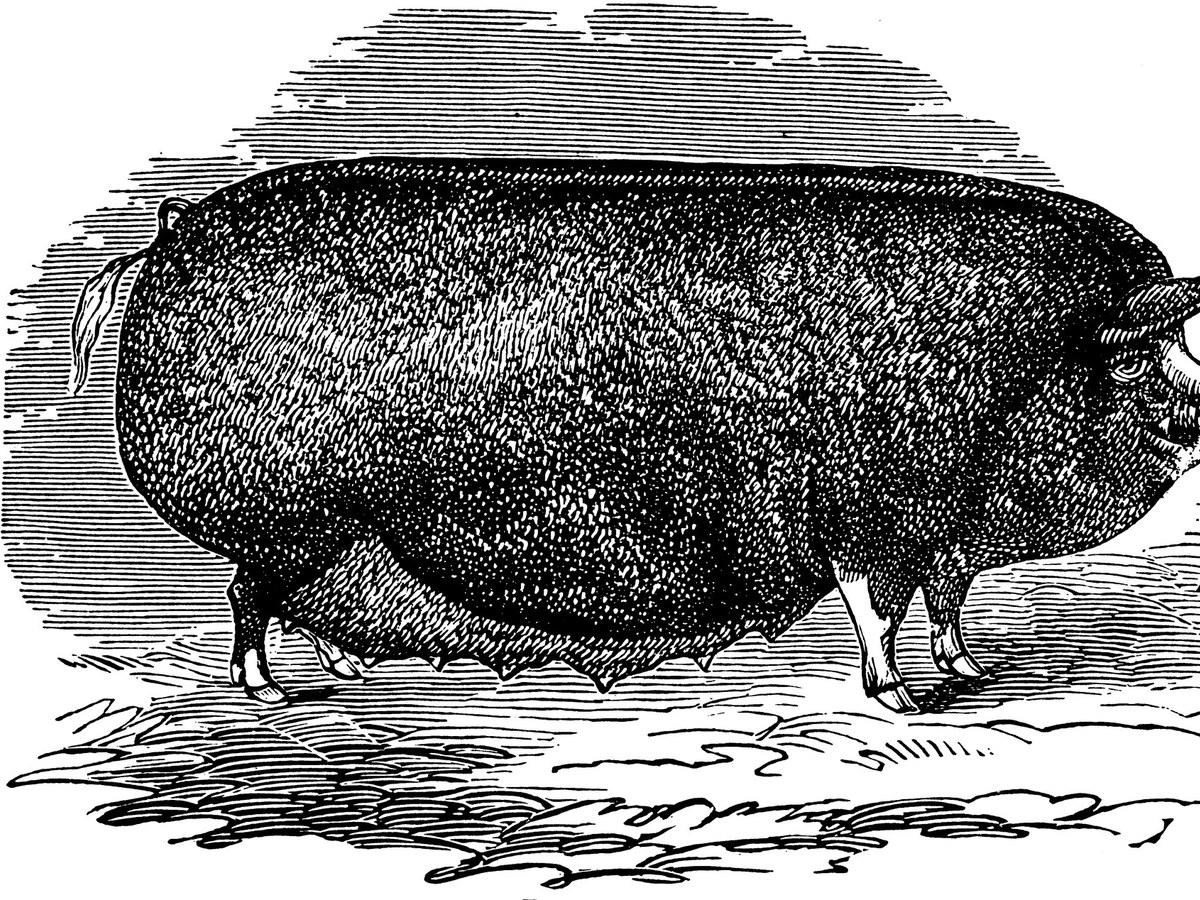
Kagoshima eats black. Its beef is black, its chicken is black, and at the centre of the trio stands the black pig: a purebred Berkshire with a black coat and six white points — snout, tail and four feet, the 'roppaku' markings — fed on the prefecture's sweet potatoes and given nearly twice the growing time of an ordinary pig. Kagoshima Kurobuta is so much the reference that since 1999 Japanese labelling law has reserved the very word kurobuta for Berkshire pork alone.
Pure Berkshire, or it is not Kagoshima Kurobuta
The certification is stated without loopholes. To be certified under the Kagoshima brand, the pigs must be pure Berkshire — no crossbreeds qualify — and raised to the strict standards of the prefectural producers' association. The brand's own council rules, dating from 1990 and revised in 2024, add the geography and the kitchen: born, raised and finished inside Kagoshima Prefecture on council farms, American Berkshire lines excluded, and shipped at about 230 to 270 days against a conventional pig's much shorter life.
One layer out, the name itself is fenced by national rule. The 1999 revision of Japan's retail meat quality labelling standards provides that only pork from the Berkshire breed may be labelled 'Kurobuta' — a breed, not a colour. The Kagoshima brand, trademarked in 1999 and shipping some 151,000 head a year, is the name's home ground and its strictest reading.
Four hundred years, by way of Ryukyu and England
The story the prefecture tells begins about 400 years ago, when the Satsuma lord Shimazu Iehisa is said to have brought black pigs from the Ryukyu Kingdom. Satsuma's pork culture survived the Edo period's meat restrictions — the domain was far from Edo's eye and traded with Ryukyu — and then, in the 1860s, history added an improbable second bloodline: after the Anglo-Satsuma War of 1863, Berkshire pigs arrived from England and were crossed with the local black stock.
Selective breeding across the generations that followed fixed the modern form: pure Berkshire, adapted to Kagoshima's climate and rearing. Production declined in the 1950s when faster commercial breeds took over, and it was the producers' own revival work that carried the pig to its official certification as a prefectural brand in 1999.
Sweet potato and time
Two inputs make the meat, and both are Kagoshima's own. In the later stages of raising, the ration carries 10 to 20 percent sweet potato — the prefecture's emblem crop — for at least 60 days before slaughter; its vitamin E improves the meat and keeps the fat from oxidising, which is why Kurobuta fat tastes clean and sweet rather than heavy. And the pigs are given time: 230 to 270 days to slaughter weight, roughly 1.2 to 1.5 times a conventional pig, letting the fine muscle fibres fill out and the fat marble evenly.
The measurements in the record are striking: studies cited in the guide found umami compounds at 3.7 times ordinary pork and sweetness at 6.7 times. Treat those as the guide's cited studies rather than a promise on every plate — but the eating order they explain is real, and it is why the prefecture serves this pork with the least possible interference.
Shabu-shabu first, then the shops
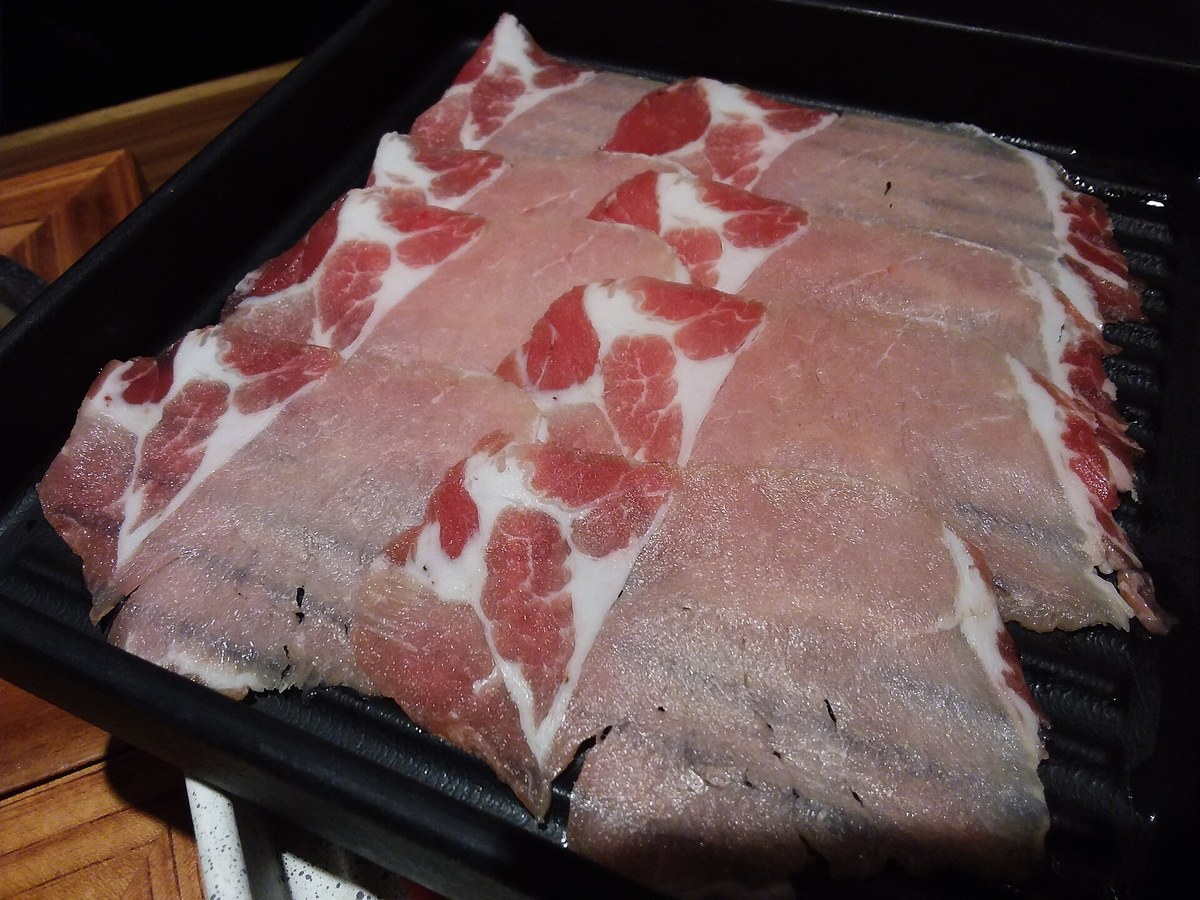
Shabu-shabu is the purest way in: a paper-thin slice swished for seconds through a delicate kelp-and-bonito broth, then ponzu or sesame — nothing between you and the meat. Kagoshima City's Tenmonkan district is the home ground, where houses such as Ichi-ni-san build their name on Kurobuta shabu-shabu; the guide puts a Kagoshima Kurobuta meal typically between ¥2,000 and ¥5,000 depending on cut and house. Tonkatsu is the second test, and the prefecture's specialists use Kurobuta exclusively.
To cook it at home, department-store gift channels carry the certified meat frozen: Takashimaya's online store lists a Marutake Sakamoto Kagoshima Kurobuta shabu-shabu set — loin, shoulder loin and belly, 100 g × 2 of each, 600 g in all, Kagoshima origin — at ¥6,480 including tax and shipping, in stock at this run's check. Wherever you buy, look for the Kagoshima certification: Berkshire alone is the national word, but Kagoshima on the label is the brand this article is about.
Sources — checked 12 November 2026
- Food in Japan — Kagoshima Black Pork: Japan's premium Berkshire pork guide (checked 12 November 2026)
- Tokyo Pork Plus — Kurobuta meaning: Japanese black pork and Kagoshima Kurobuta (checked 12 November 2026)
- Takashimaya Online Store — Marutake Sakamoto Kagoshima Kurobuta shabu-shabu three-cut set (checked 12 November 2026)
Original prose and official links only; no source text or maker media reproduced. Photos are credited Creative Commons works, not product photographs.
Editorial review 2026-11-12