Inside Nagasaki's grandest cuisine hides a dish too good to wait for a banquet. Shippoku, the city's Chinese-influenced feast cooking, serves tonporo — pork belly braised until it surrenders — as one course among many. In the decades after its founding in 1965, one Nagasaki maker asked why the pork could not travel on its own, wrapped in a bun. It gives Nagasaki its third story in this collection.
From the banquet table to the hand
Nagasaki's shippoku cuisine is the city's historic banquet style, built over centuries of trade with China and the West: a full course of dishes served to be shared, among them tonporo, the Dongpo-style pork belly braised slowly in soy and sugar until the fat turns to jelly. It is magnificent and impractical — you meet it at a feast, in a restaurant, at a set hour. Iwasaki Honpo, founded in April 1965 in Nagasaki Prefecture and still based in Nagayo Town outside the city, built its name on the opposite idea.
The maker's own account of the invention is disarmingly plain: wishing to make that one shippoku dish easier to eat and tastier, the company took its slow-cooked kakuni — pork belly simmered at length and then carefully de-fatted, so the result is rich without being heavy — and enclosed it in a soft, fluffy steamed bun. The Nagasaki Kakuni Manju was born: banquet pork, hand-held. In 1997 it won the top prize at the 28th Nagasaki Prefectural New Specialty Products Exhibition, the prefecture's own verdict that the idea had become a Nagasaki specialty.
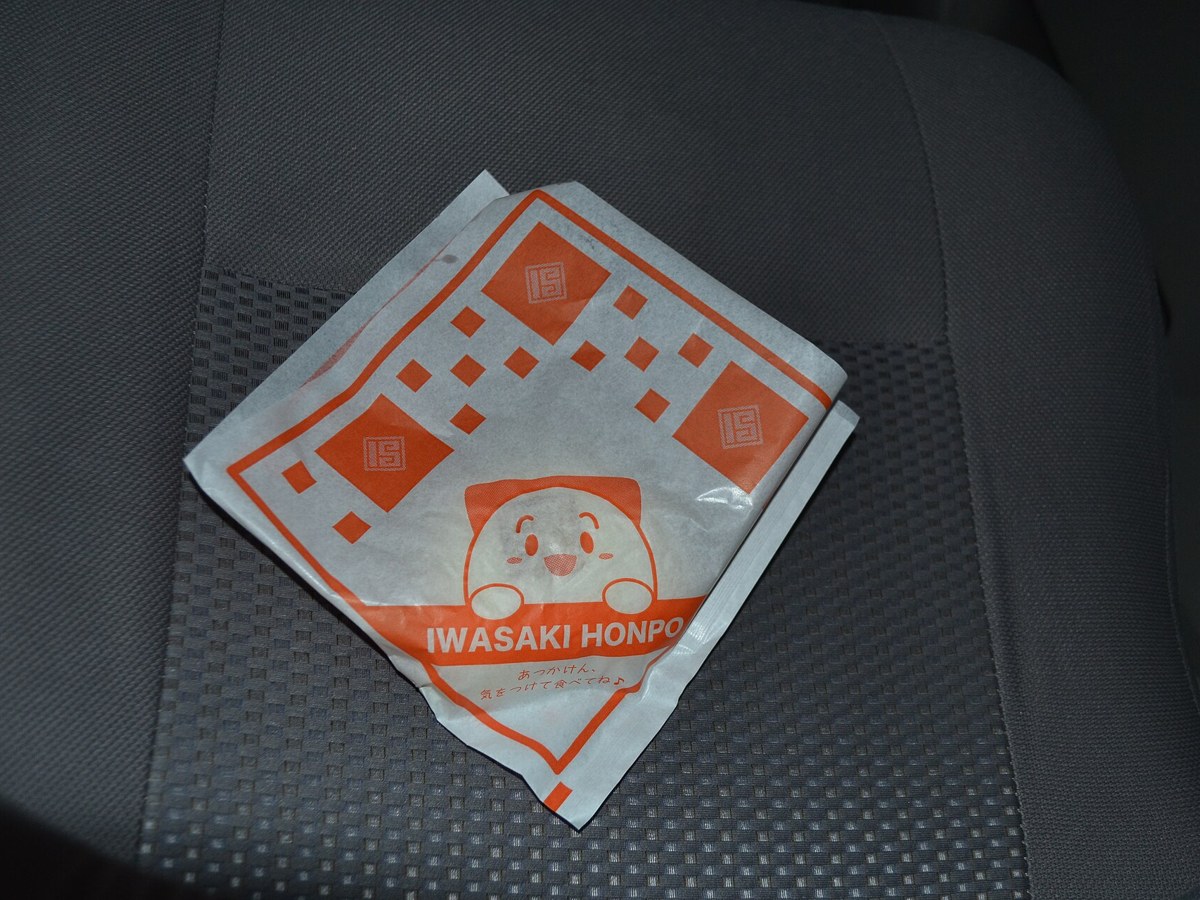
One maker, one bun, a family of variants
Plenty of shops now sell a pork bun in Nagasaki, and kakuni manju as a phrase travels. What this page documents is narrower: the single maker's product line, sold under its own name from its own shops and its official online shop. The classic bun is a fixed object — 75 grams, 249 kilocalories, on the maker's own figures — and around it the maker has built a small family: the Otoro kakuni manju with a fattier cut, a cheese version, and seasonal stamped variants such as the enmusubi buns released for spring.
The maker's prices, from its own releases, keep the bun in everyday territory: a classic three-pack is ¥1,410 including tax, and the three-kind tasting set — four classic, two Otoro and two cheese buns — is ¥5,000 including tax. A frozen vending machine outside the maker's Sumiyoshi shop in Nagasaki sells the buns around the clock, which may be the most Nagasaki sentence in this collection: the city's banquet pork, from a machine, at midnight.
How the bun is kept and heated
The official shop's instructions are exact, and they matter: the buns are a frozen product, kept below minus 18 degrees, with a shelf life of 180 days from manufacture. Thaw one naturally — on the counter or in the fridge, the maker calls natural thawing the trick to a good finish — then heat it in its film, one bun at a time, for about 40 seconds at 600 watts, adding ten seconds at a time if needed; never use the microwave's automatic mode. Or, after thawing and removing the film, steam it for ten to fifteen minutes over a lined steamer. Either way the bun should come back plump and the pork hot through.
One honest line from the maker's own ingredient list, which this page repeats rather than tidies away: the pork is Chilean highland pork, and the flour is North American wheat processed in Kumamoto, while the soy sauce is Nagasaki-made. The craft, the recipe and the company are Nagasaki's; the pig, these days, is not. Judge the bun as what it is — a Nagasaki invention of 1965's company, made in Nagasaki — and it loses nothing by the honesty.
How to buy it, and where it belongs
In Nagasaki, buy single buns hot at the maker's direct shops in the city and eat the first one walking, while the bun is still steaming. For taking home, the frozen packs are the form the souvenir trade is built on: the three-pack at ¥1,410, or the tasting set if the family needs convincing. The maker's own online shop ships the same frozen buns across Japan, so a Nagasaki trip is not the only route — but the hot single bun, eaten in the city that invented it, is the edition in full.
Set it beside the collection's other Nagasaki stories and the city's table completes itself: Fukusaya's castella, four centuries old, for the sweet that came by ship; Hasami's porcelain for the tableware; and this, the pork course of the banquet, folded into bread by a company younger than the grandparents who first queued for it.
Sources — checked 10 November 2026
- Iwasaki Honpo official online shop: Nagasaki Kakuni Manju category page
- Iwasaki Foods press release (via Jiji): Kakuni Manju gift campaign, November 2026
- Iwasaki Foods press release (via Mapion News): Kakuni Manju frozen vending machine, 2023
- Iwasaki Foods press release (via AtPress): Kakuni Manju company and product outline
Original prose and official links only; no source text or maker media reproduced. Photos are credited Creative Commons works, not product photographs.
Editorial review 2026-11-10